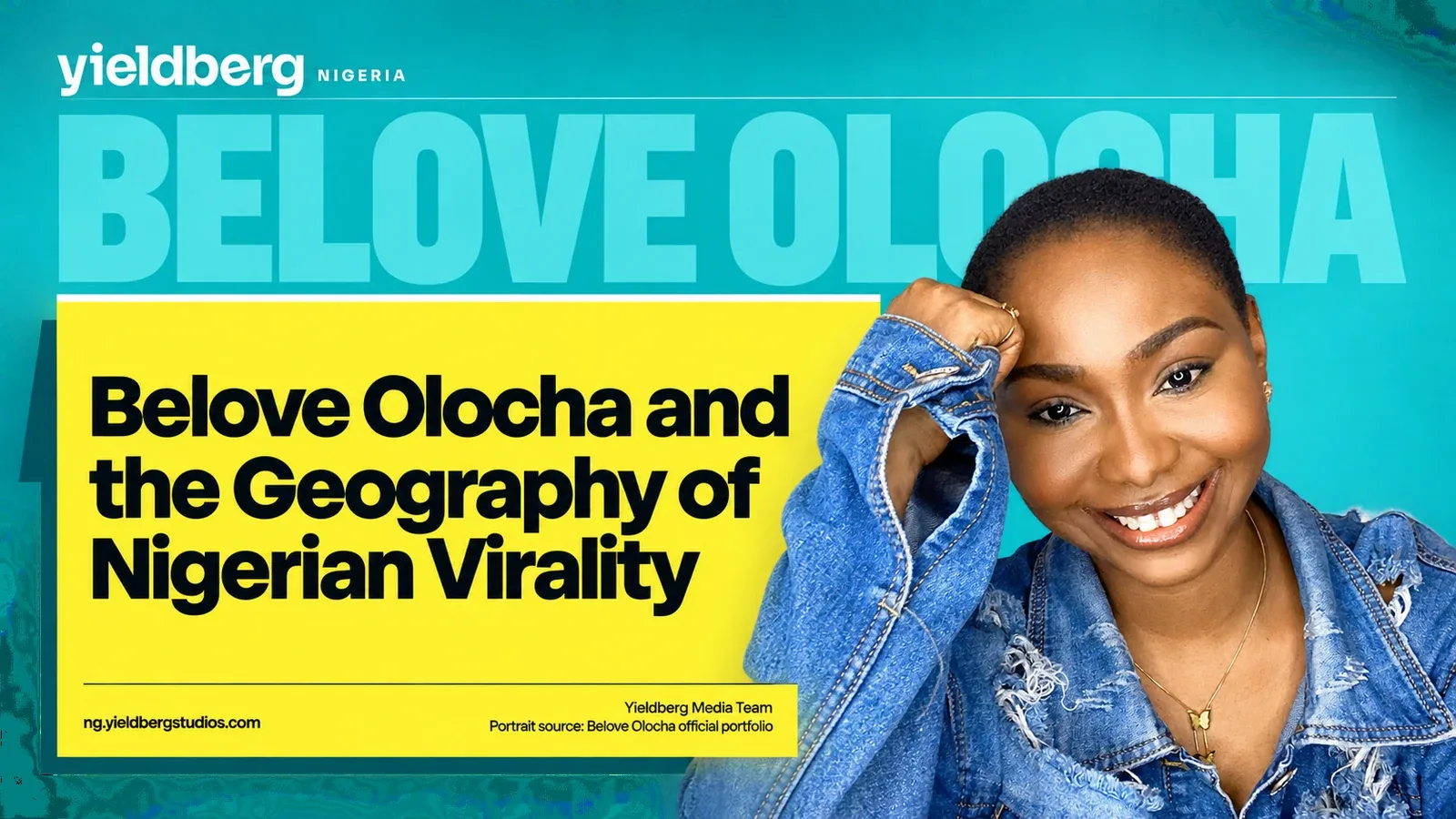
Belove Olocha’s appeal is not that she sounds like every Nigerian. It is that she sounds located: her delivery, pop-culture references and conversational confidence give viewers a recognisable person rather than a generic entertainment presenter. That specificity can travel nationally when the joke or recommendation supplies enough context. It becomes a liability only when distributors strip away that context, or when viewers mistake an unfamiliar accent for poor communication.
The practical conclusion is that regional identity should be treated as creative information, not corrected out of the work. Criticism of accuracy, pace or repetition can be useful. Mockery that reduces a creator to accent, origin or presumed intelligence is prejudice, not an alternative editorial view.
What Belove Olocha actually makes
Belove Olocha’s public work sits across film recommendations, reality-television conversation, pop-culture commentary, interviews and personality-led entertainment. Her own public link portfolio records work around Big Brother Naija eviction interviews, film premieres and entertainment campaigns. The page is self-published evidence of the formats she claims, not independent proof of each campaign’s result.
Her rise is also documented by the platform on which much of the work lives. TikTok named Olocha its 2025 Entertainment Creator of the Year for Sub-Saharan Africa. In a later TikTok African All-Stars interview, she explained that movies, reality shows and pop culture were natural subjects for her, and that she recommends titles according to what she has learned her community enjoys. Premium Times reported the same award and her advice that creators must tolerate the discomfort of putting themselves forward.
An award establishes platform recognition. It does not demonstrate that Nigerians as a whole approve of her, nor does it identify why individual viewers watch. The more useful question is what happens when a voice built in one platform context moves into another.
How this sample was reviewed
This article uses a qualitative desk sample collected on 26 September 2026. It covers publicly accessible material from 26 September 2025 to 26 September 2026, plus older portfolio material used only for career context. We reviewed Olocha’s public TikTok identity and platform interview, the public portfolio linked to her creator identity, coverage of her 2025 award and publicly indexed references to her entertainment work.
Complete TikTok comment threads were not available in the logged-out interface. Public Facebook and X searches did not produce a sufficiently reliable set of creator-originated posts and dated replies to support platform-level sentiment counts. We therefore do not publish percentages, claim a representative national view or describe unseen comments. TikTok evidence in this sample shows format and platform recognition; Facebook and X are discussed as distribution contexts, not measured opinion panels.
This limitation matters. A repost caption can tell Facebook users what to think before they see a clip. An X quote-post can turn a longer recommendation into a dispute about one phrase. Neither response should be attributed automatically to the creator’s original TikTok audience.
What the positive response is built around
A clear point of view
Olocha does not approach entertainment as a neutral listings desk. She presents a judgement, a feeling and a recommendation. That makes the viewer’s decision easier: watch, skip or argue. Her TikTok interview shows that she actively distinguishes her private taste from what her community tends to enjoy. That is an editorial choice, even if it is expressed casually.
The permission to be visibly ambitious
Her repeated language about beginning before she had a grand plan, being “shameless” about creating and continuing to reinvent herself gives supporters a second story beyond film or reality television. The work becomes evidence that a creator can build a media role by showing up before conventional gatekeepers appoint them.
That frame should not be romanticised. Persistence does not prove every recommendation is sound, and a platform award does not make an entertainment opinion authoritative. It does explain why an audience may respond to the person as well as the subject.
Recognition without flattening
Nigerian English contains many regional and social varieties. Place can be audible through rhythm, vocabulary and pronunciation even when a creator is speaking English. For viewers who recognise those cues, familiarity can make a clip feel socially close. For viewers who do not, subtitles, an on-screen title or one sentence of context can preserve the creator’s voice while lowering the effort required to follow the point.
The wrong response is to treat one Lagos media register as the neutral national sound and everything else as a deviation. Yieldberg Nigeria’s guide, There Is No Single Nigerian Audience, explains why language and place change meaning rather than merely decorating it.
Where legitimate criticism begins
The first legitimate test is accuracy. A recommendation should distinguish a personal reaction from a factual claim about a film, cast, release or event. When a detail is wrong, a correction is useful regardless of the speaker’s accent.
The second is explanation. An enthusiastic verdict may entertain regular followers but leave a first-time viewer without the premise, genre or reason for the recommendation. That is an editorial problem that can be fixed without replacing the creator’s voice.
The third is range. A creator who has learned what performs can become trapped by that knowledge. Olocha told TikTok that she withholds some slower personal favourites because her community may find them boring. That is sensible audience judgement, but it creates a strategic question: does the channel only confirm established taste, or can it occasionally teach the audience how to enter unfamiliar work?
Criticism stops being useful when it equates a regional sound with ignorance, treats origin as comic evidence, or demands that the creator become culturally anonymous before being considered professional. Those reactions describe the listener’s hierarchy, not the quality of the work.
The Context Migration Map
The Context Migration Map is an editorial method developed for this article. It tests whether a geographically marked piece of content can move without losing its meaning or exposing the creator to avoidable stereotyping.
| Test | Question to ask | Evidence to inspect | Decision |
|---|---|---|---|
| Voice | Which words, rhythm or delivery carry the creator’s identity? | Original clip and a transcript reviewed by a competent speaker | Preserve them unless comprehension, not prejudice, is the issue |
| Setting | What does the original audience already know? | Caption, preceding posts, programme context and visual cues | Add only the context a new viewer genuinely lacks |
| Carrier | Who is reposting the work and how is it framed? | Repost headline, thumbnail, edit length and account history | Reject framing that turns identity into ridicule or clickbait |
| Translation | What support improves access without erasing style? | Subtitle accuracy, spelling, names and timing | Use reviewed captions or a short explainer, not a flattened rewrite |
| Reaction target | Are people disputing the idea, delivery or identity? | Reasoned replies separated from slurs and origin-based mockery | Retain idea criticism; quarantine abuse from the insight report |
| Return path | Can viewers find the full work and its author? | Credit, tag, original link and clip permissions | Do not distribute an orphaned extract |
This method prevents two common errors. The first is assuming every negative reaction is prejudice. The second is treating prejudice as ordinary feedback that the creator must accommodate.
A worked distribution example
Imagine a 55-second TikTok in which Olocha recommends a new Nigerian film using an expressive opening, two plot-free reasons and a final verdict. A publisher wants to repost 18 seconds on Facebook, while a brand wants a subtitled version on X.
The Facebook cut removes both reasons and keeps only the emphatic verdict. The page caption calls it a “wild take”. That edit is likely to produce argument about tone because the evidence has disappeared. The better Facebook version keeps one reason, names the film in text and credits the original creator.
The X version adds subtitles, but the editor “corrects” every colloquial construction into formal written English. Comprehension improves little and personality disappears. The better version transcribes what was said accurately, checks names and adds a short bracket only where a reference would otherwise be unclear.
Nothing in this scenario requires hiding where the creator is from. It requires the distributor to carry enough meaning forward.
What creators and commissioning brands should do
Olocha and creators working in similar formats should keep an error log that separates factual correction from taste disagreement. Correct names, dates and claims visibly. Do not apologise for an opinion merely because it is unpopular.
Brands should review original posts, not only viral reposts. Ask whether the voice, location and entertainment speciality fit the assignment. Then commission the creator to interpret the subject rather than handing over generic copy. Agree on title accuracy, spoiler boundaries, disclosure, clip length, subtitle review, paid amplification, duration and the right to correct a misframed extract.
If meaning depends on a Nigerian language, regional idiom or culturally specific joke, use a reviewer competent in that speech community. Do not ask a general copy editor to guess. The reviewer’s task is to protect meaning, not remove the accent.
A 10-day publishing sequence
- Days 1–2: define the audience situation. State who needs the recommendation, what they already know and which decision the content should help them make.
- Days 3–4: audit six full posts. Compare ordinary, high-attention and commercial work. Record the subject, opening, evidence, language, disclosure and correction behaviour.
- Day 5: identify the non-negotiable voice. Mark the phrases, pace and visual habits that make the creator recognisable.
- Day 6: run the Context Migration Map. Test the original and every planned cut separately.
- Days 7–8: review language and rights. Check subtitles with a competent reviewer; settle credit, music, clips, duration, territory and paid use.
- Day 9: pre-test without coaching. Show the asset to a small group that includes people familiar and unfamiliar with its cultural context. Ask what they think happened and why.
- Day 10: decide. Publish only if unfamiliar viewers can recover the core point and the edit still sounds like the creator.
After publication, code corrections, saves, completed views and reasoned responses separately by platform. The decision point is not whether every viewer likes the accent. It is whether the intended audience understood the recommendation without the work being culturally sterilised.
Related reading
Frequently asked questions
Does a TikTok award prove broad Nigerian popularity?
No. It demonstrates recognition within an award process operated by the platform. It is relevant evidence of prominence, not a representative measure of national opinion.
Should creators subtitle Nigerian English?
Use subtitles when they improve access, especially for noisy, silent or cross-regional viewing. Transcribe faithfully and have culturally specific wording reviewed. Subtitles should not imply that one Nigerian variety is defective.
Is criticism of an accent always prejudice?
No. A viewer may reasonably report that sound quality, speed or an unexplained reference made a clip difficult to follow. Criticism becomes prejudicial when it treats origin or accent as proof of inferior intelligence, taste or professional worth.
Can a brand adapt the creator’s language for an advert?
Only within agreed rights and with the creator involved. Literal translation or corporate rewriting can remove the social relationship that made the voice effective. Specify who approves subtitles, captions and regional versions before production.
Sources
- TikTok African All-Stars: Belove Olocha, first-party interview about her formats, audience judgement and 2025 award.
- Premium Times: Nigerian TikTok creators discuss growth and monetisation, reporting on Olocha’s recognition and public advice.
- The Guardian Nigeria: 2025 TikTok Awards winners, independent confirmation of the award result.
- Belove Olocha’s public portfolio, self-published record of formats and collaborations, checked 26 September 2026.
- TikTok Research API eligibility, context for why this manual editorial sample is not a full platform dataset.
Next decision: Read There Is No Single Nigerian Audience before deciding whether a regional expression needs adaptation or simply better distribution context.
 By Isong Godswill

 By Omodot Jackson