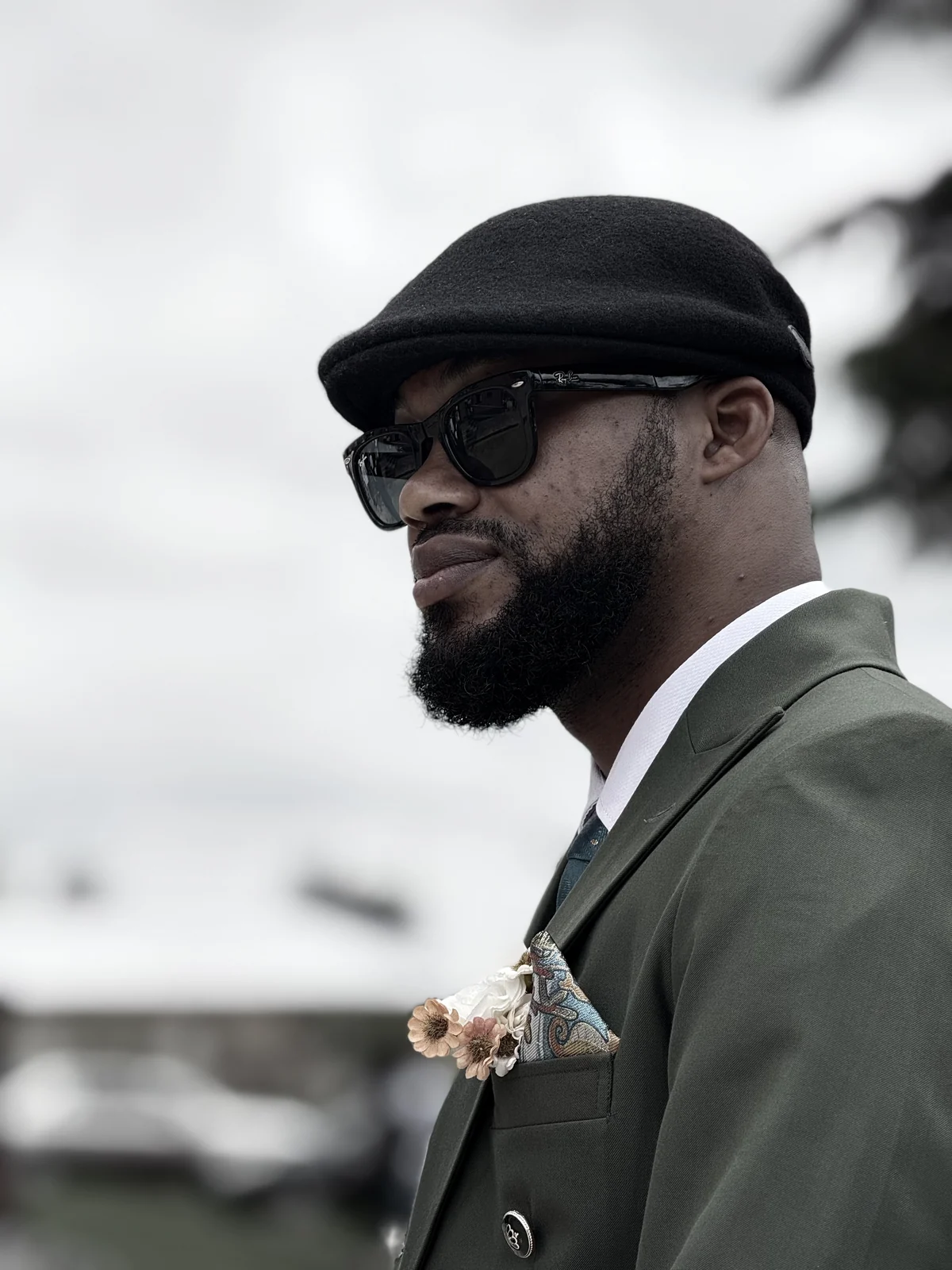
Portrait of Omodot Jackson

Omodot Jackson

Communication Expert | Web Content Creator | Researcher & Writer

About

Full portrait of Omodot Jackson

About Omodot Jackson

Omodot Jackson is a researcher, writer, and development-focused professional with a Bachelor of Arts in English and Literary Studies from the University of Uyo, Nigeria. His interests span strategic communication, content development, emerging technologies, and inclusive development.

As a young Nigerian who has worked independently with brands, he is skilled in brand development through content writing and strategies that strengthen the brand's identity, enhance audience engagement, and market presence. He is also good at coordinating creative projects, schedules, and stakeholder communication while supporting executive priorities through research, content planning, documentation, and proactive follow-up.

Passionate about artificial intelligence and its potential to transform how people learn, create, work, and solve problems, Omodot is particularly interested in the intersection of technology and human development. He aspires to contribute to initiatives that expand opportunities for young people and women while supporting meaningful development and public service in Nigeria.

Researchwritingstrategic communicationcontent developmentemerging technologiesinclusive developmentbrand strategycreative project coordination
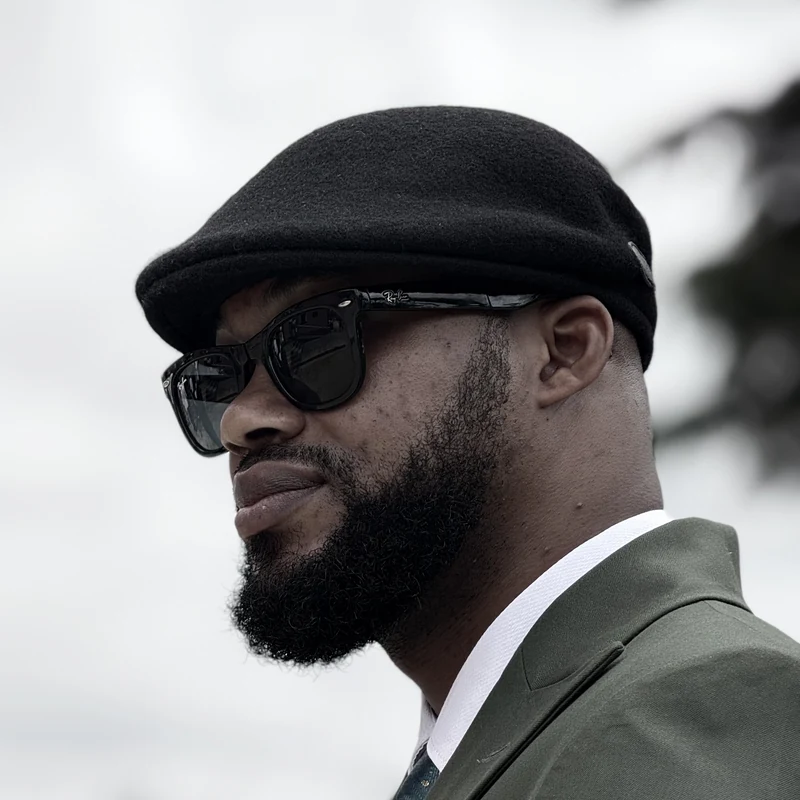
Yieldberg Nigeria editorial cover for “The History of Nigerian Graphic Design: From Print Shops to Digital Studios”.

The History of Nigerian Graphic Design: From Print Shops to Digital Studios

Surviving records do not show one national march from letterpress to laptop. The sources below offer dated snapshots of print production, printing education, publishing, advertising, book and album credits, a trade-fair poster, film-poster preservation and an online university curriculum. Together they trace selected production routes and named roles; they do not establish when one unified Nigerian graphic-design pro
By Omodot JacksonRead the story
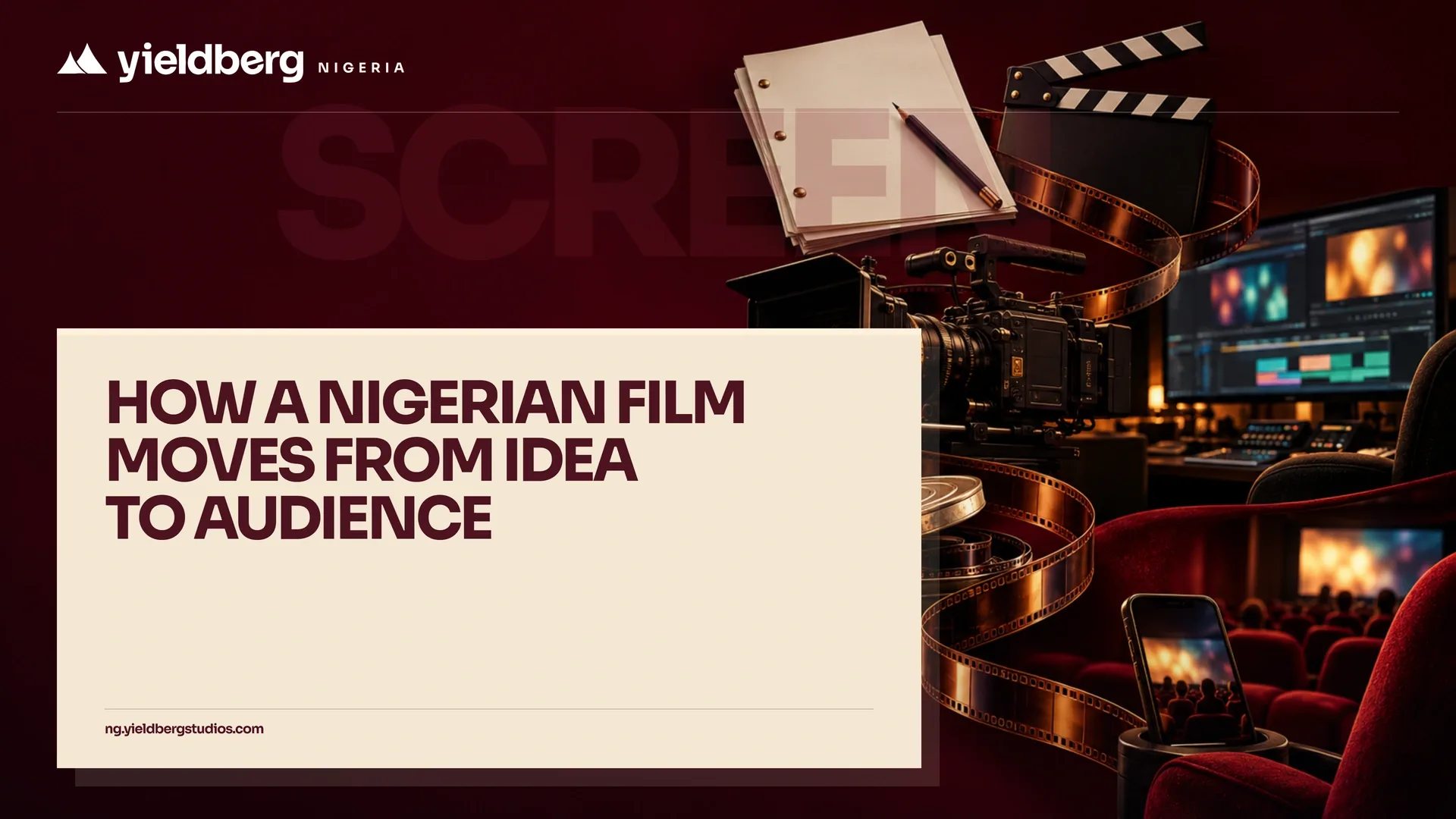
Yieldberg Nigeria editorial cover for “How a Nigerian Film Moves from Idea to Audience”.

How a Nigerian Film Moves from Idea to Audience

A Nigerian film reaches an audience through a chain of decisions, not a straight line from script to set to screen. The producer must connect a defined public and release route to development, finance, rights, production, classification, delivery and marketing before the shoot consumes the room for change.

By Omodot JacksonRead the story
Yieldberg Nigeria editorial cover for “Lagos, the Regions and the Diaspora: Three Different Audience Contexts”.

Lagos, the Regions and the Diaspora: Three Different Audience Contexts

Treat Lagos, every Nigerian regional market and every diaspora community as separate research questions. They can share people, language, media and cultural references without responding from the same situation. The practical rule is simple: never carry an audience conclusion across those contexts until you have tested residence, language, access, motivation and the action being requested.

By Omodot JacksonRead the story
Yieldberg Nigeria editorial cover for “How Nigerian Photography Became a Public Record”.

How Nigerian Photography Became a Public Record

Nigerian photography became a public record through connected acts of making, captioning, circulating and preserving images in studios, royal courts, newspapers, family albums, documentary projects and art institutions. A photograph does not become dependable historical evidence simply because it is old or widely shared. Its value changes when the maker, subject, date, purpose, original caption, custody and reuse rig

By Omodot JacksonRead the story
Yieldberg Nigeria editorial cover for “Language Is Production Infrastructure”.

Language Is Production Infrastructure

Language becomes production infrastructure when changing it changes who can perform credibly, what the audience understands, which versions must be made or where the work can travel. Decide those questions before the script and casting are locked, not when somebody asks for subtitles after the final edit.

By Omodot JacksonRead the story
Yieldberg Nigeria editorial cover for “Who Regulates What in Nigerian Media and Advertising?”.

Who Regulates What in Nigerian Media and Advertising?

No single regulator clears every Nigerian media or advertising project. Route the work according to what the message claims, where it will appear, whether it collects personal data, which protected material it uses, and whether the product belongs to a specially regulated sector.

By Omodot JacksonRead the story
Yieldberg Nigeria editorial cover for “A Timeline of Nigerian Advertising: Agencies, Media and Defining Shifts”.

A Timeline of Nigerian Advertising: Agencies, Media and Defining Shifts

Nigerian advertising did not begin with one agency, jingle or television commercial. It developed through overlapping systems of market speech, print, outdoor display, broadcasting, Nigerian-owned agencies, professional regulation, mobile networks and creator-led media. The safest way to tell the history is to date the change each piece of evidence can prove, without turning a memorable campaign into an unsupported o

By Omodot JacksonRead the story
Yieldberg Nigeria editorial cover for “A Timeline of Modern Nigerian Art: Schools, Movements and Turning Points”.

A Timeline of Modern Nigerian Art: Schools, Movements and Turning Points

Modern Nigerian art has no single birthplace or straight line of succession. Its history was made through overlapping routes: indigenous practices, colonial and postcolonial art education, independent societies, experimental workshops, university departments, public institutions, private initiatives and artists working between Nigeria and other countries.

By Omodot JacksonRead the story
Yieldberg Nigeria editorial cover for “From Celluloid to Streaming: A Timeline of Nigerian Film and Television”.

From Celluloid to Streaming: A Timeline of Nigerian Film and Television

Nigerian screen history is not a straight journey from celluloid to video and then streaming. It is a history of overlapping systems: cinema exhibition, regional and national television, travelling theatre, celluloid production, home-video markets, pay television, multiplexes, digital terrestrial broadcasting and online platforms. A reliable timeline must show what each change altered, and what it left in place.

By Omodot JacksonRead the story
Yieldberg Nigeria editorial cover for “How Nigerian Creative Work Travels Across Music, Screen, Fashion and Language”.

How Nigerian Creative Work Travels Across Music, Screen, Fashion and Language

Nigerian creative work travels when a recognisable element is deliberately carried into another medium by a documented collaborator, adaptation, sample, performance, translation or distribution route. The strongest account follows that chain and names who changed what, for which audience and under which credit or permission. If the evidence shows only resemblance, describe a comparison, not an influence.

By Omodot JacksonRead the story
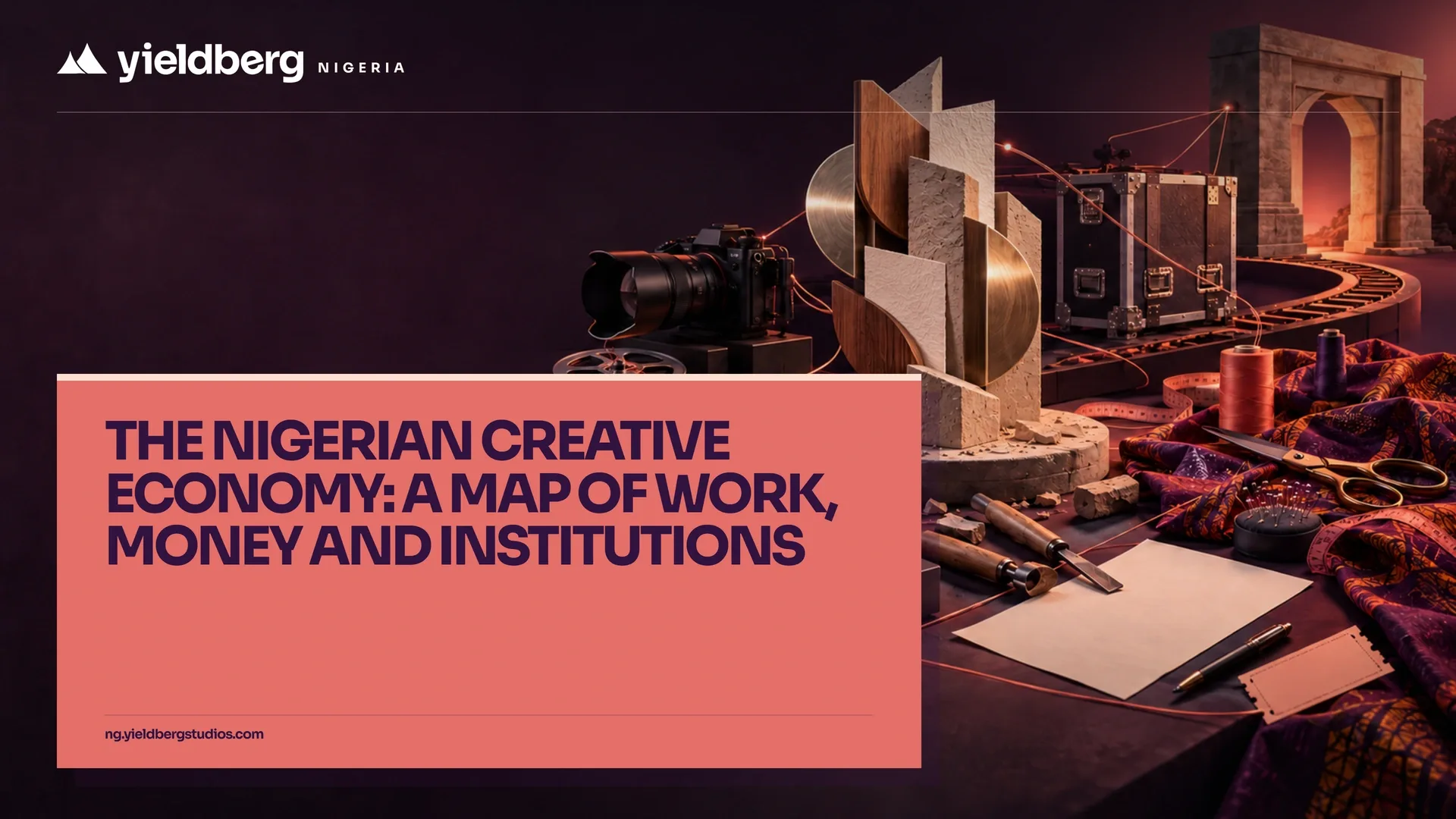
Yieldberg Nigeria editorial cover for “The Nigerian Creative Economy: A Map of Work, Money and Institutions”.

The Nigerian Creative Economy: A Map of Work, Money and Institutions

Nigeria's creative economy is not one industry with one revenue figure. It is a set of connected systems in which people create work, supply production services, control or license rights, distribute culture, attract attention and carry financial risk. To plan or evaluate a project, map those flows separately before using a national market-size claim.

By Omodot JacksonRead the story
Yieldberg Nigeria editorial cover for “A Field Guide to Nigerian Advertising and Popular Communication”.

A Field Guide to Nigerian Advertising and Popular Communication

Nigerian advertising works as a chain connecting an advertiser, an idea, production, media, regulation and an audience in a particular situation. Treating it as a clever television commercial or social post removes the decisions that determine whether the communication is lawful, culturally legible, properly distributed and commercially useful. The practical recommendation is to design the whole chain before approvin

By Omodot JacksonRead the story
Yieldberg Nigeria editorial cover for “A Field Guide to Nigerian Visual Culture: Art, Photography, Design and Fashion”.

A Field Guide to Nigerian Visual Culture: Art, Photography, Design and Fashion

Do not search for one national look in Nigerian visual culture. Treat art, photography, design and fashion as distinct but connected production systems, then trace each work through place, lineage, labour, circulation and rights. If you are acquiring art, provenance and title may deserve the most attention; if you are commissioning a campaign, the production chain, consent and permitted uses become decisive.

By Omodot JacksonRead the story
Yieldberg Nigeria editorial cover for “What Is Nollywood? A Working Definition of Nigeria's Film Industries”.

What Is Nollywood? A Working Definition of Nigeria's Film Industries

Nollywood is best used as an umbrella name for Nigeria's commercially organised popular film cultures, especially the industries that grew through video production and Nigerian-led distribution from the late twentieth century onwards. The term becomes too blunt when language, location, regulation, audience or distribution materially changes the story. In those cases, name the specific industry, such as Kannywood or Y

By Omodot JacksonRead the story
Have a brief?

Bring us the ambition.
We’ll build the attention.