The Yieldberg brief

Ideas for work
that moves.

Original thinking from Yieldberg Nigeria on culture, creator partnerships, advertising and enduring media formats.

Latest story

Latest story

More from Yieldberg

All stories

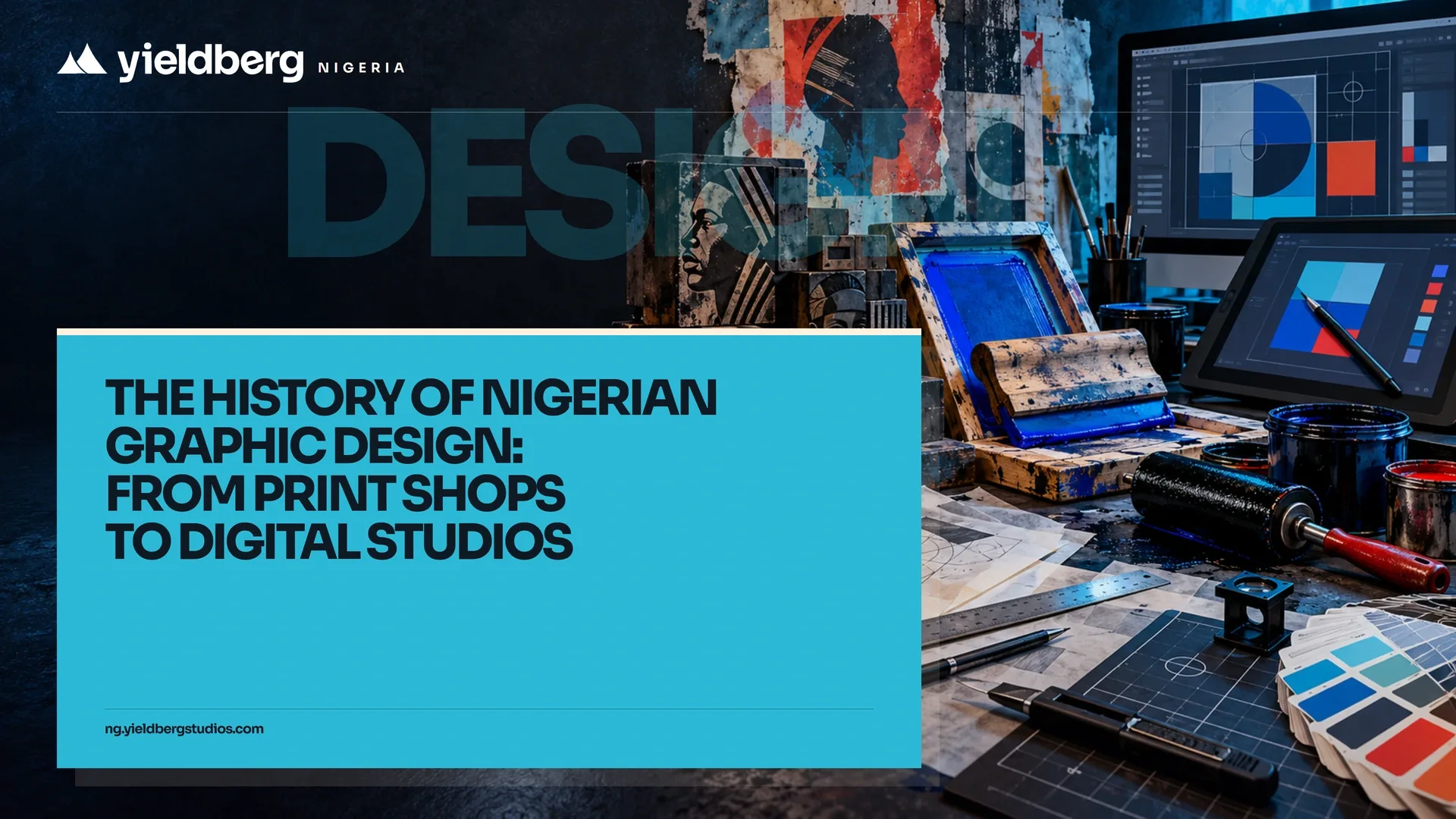
Yieldberg Nigeria editorial cover for “The History of Nigerian Graphic Design: From Print Shops to Digital Studios”.

The History of Nigerian Graphic Design: From Print Shops to Digital Studios

Surviving records do not show one national march from letterpress to laptop. The sources below offer dated snapshots of print production, printing education, publishing, advertising, book and album credits, a trade-fair poster, film-poster preservation and an online university curriculum. Together they trace selected production routes and named roles; they do not establish when one unified Nigerian graphic-design pro

By Omodot JacksonRead the story
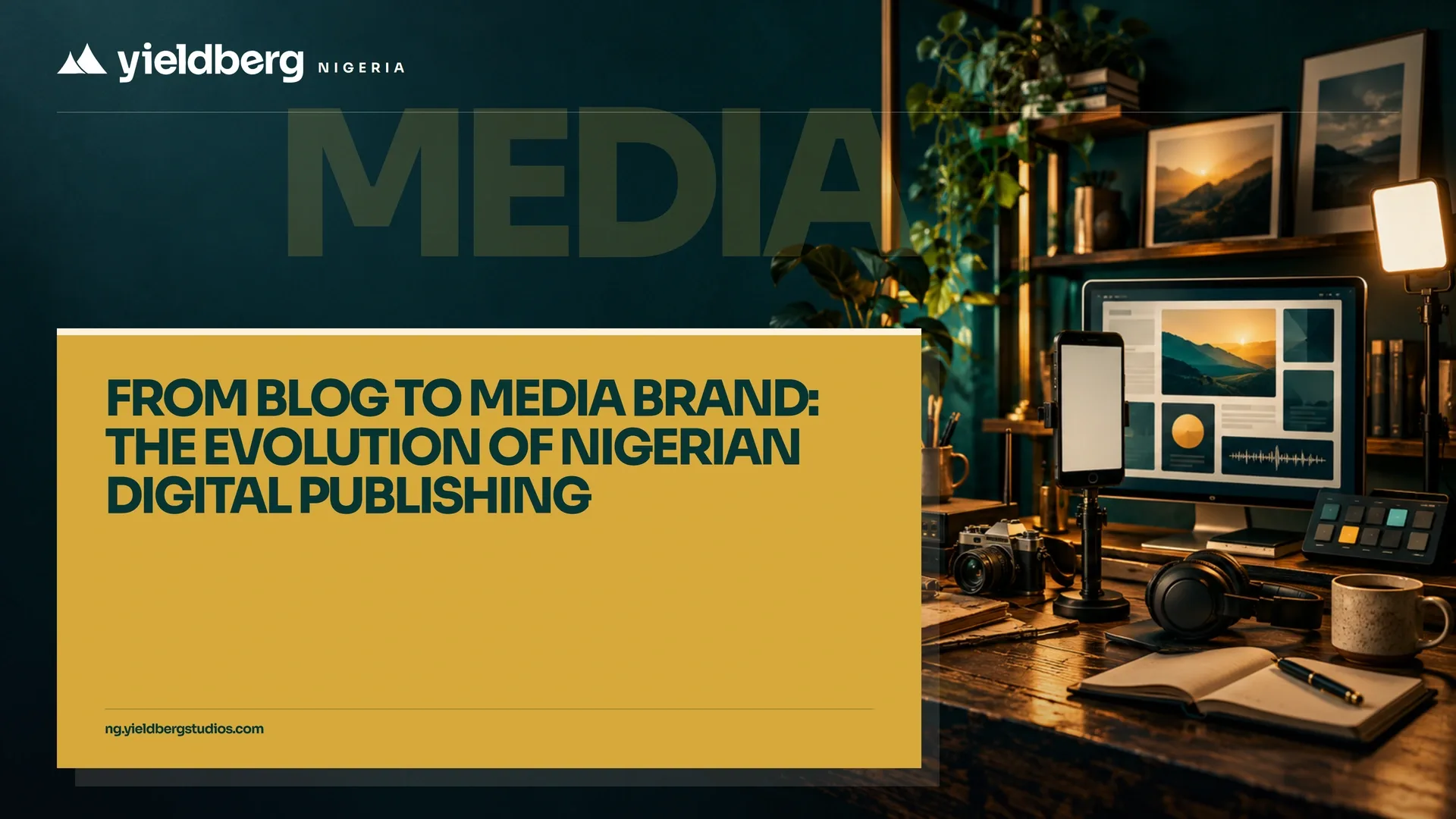
Yieldberg Nigeria editorial cover for “From Blog to Media Brand: The Evolution of Nigerian Digital Publishing”.

From Blog to Media Brand: The Evolution of Nigerian Digital Publishing

Nigerian digital publishing did not follow one path from personal blog to formal company. It grew through different models: personality-led blogs, community forums, specialist discovery sites and editorial portals that gradually developed repeatable publishing, commercial relationships, contributor networks and recognisable archives.

By Isong GodswillRead the story
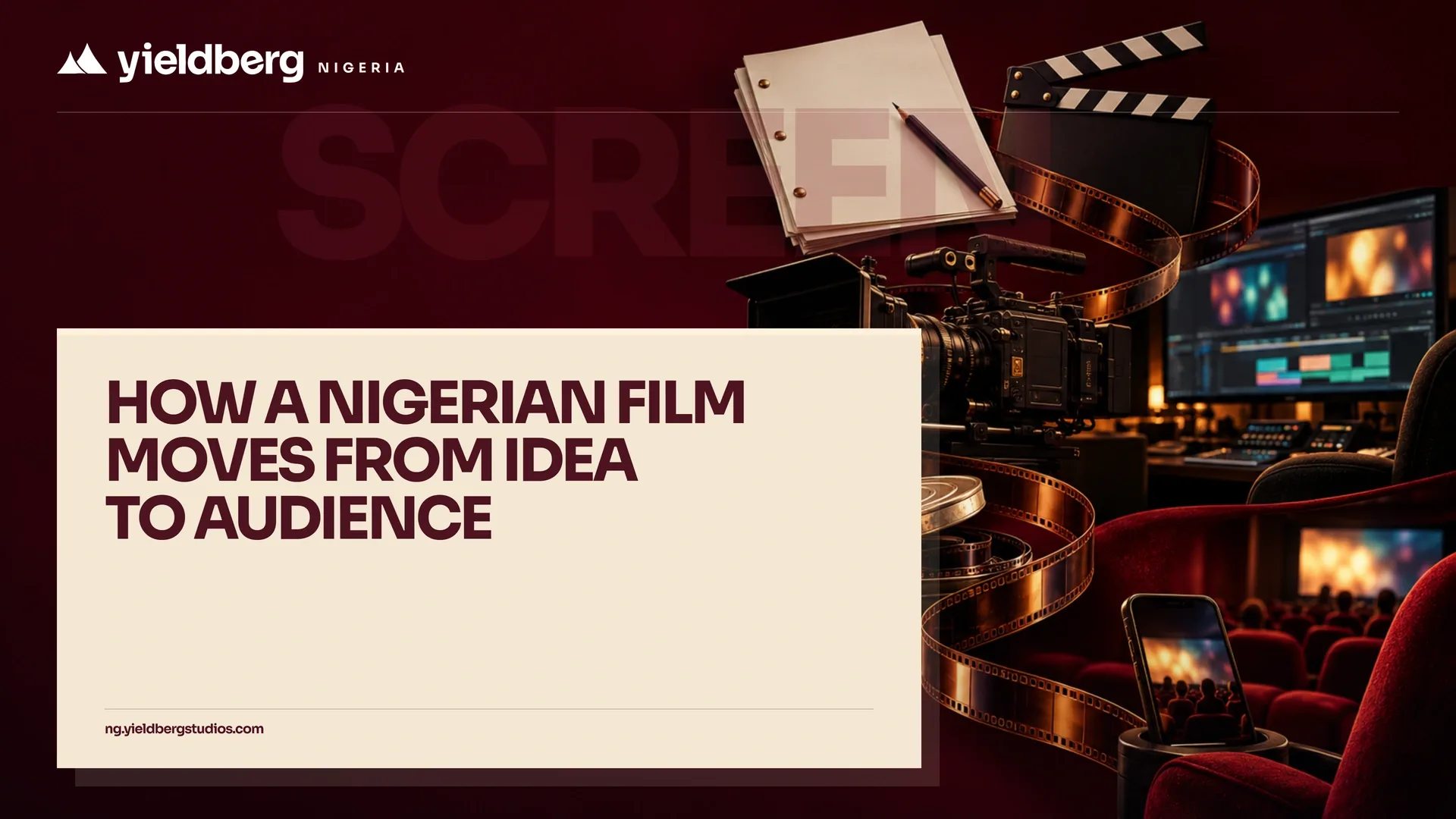
Yieldberg Nigeria editorial cover for “How a Nigerian Film Moves from Idea to Audience”.

How a Nigerian Film Moves from Idea to Audience

A Nigerian film reaches an audience through a chain of decisions, not a straight line from script to set to screen. The producer must connect a defined public and release route to development, finance, rights, production, classification, delivery and marketing before the shoot consumes the room for change.

By Omodot JacksonRead the story
Yieldberg Nigeria editorial cover for “Lagos, the Regions and the Diaspora: Three Different Audience Contexts”.

Lagos, the Regions and the Diaspora: Three Different Audience Contexts

Treat Lagos, every Nigerian regional market and every diaspora community as separate research questions. They can share people, language, media and cultural references without responding from the same situation. The practical rule is simple: never carry an audience conclusion across those contexts until you have tested residence, language, access, motivation and the action being requested.

By Omodot JacksonRead the story
Yieldberg Nigeria editorial cover for “The Nigerian Home-Video Cover Archive”.

The Nigerian Home-Video Cover Archive

A Nigerian home-video cover should be archived as a dated commercial object rather than as an attractive image alone. Its title treatment, portraits, format, part number, rating, marketer, address and surviving condition can connect a film to the people who packaged it and the routes through which it travelled. The recommendation changes when provenance or image rights cannot be established: publish a metadata-only r

By Isong GodswillRead the story
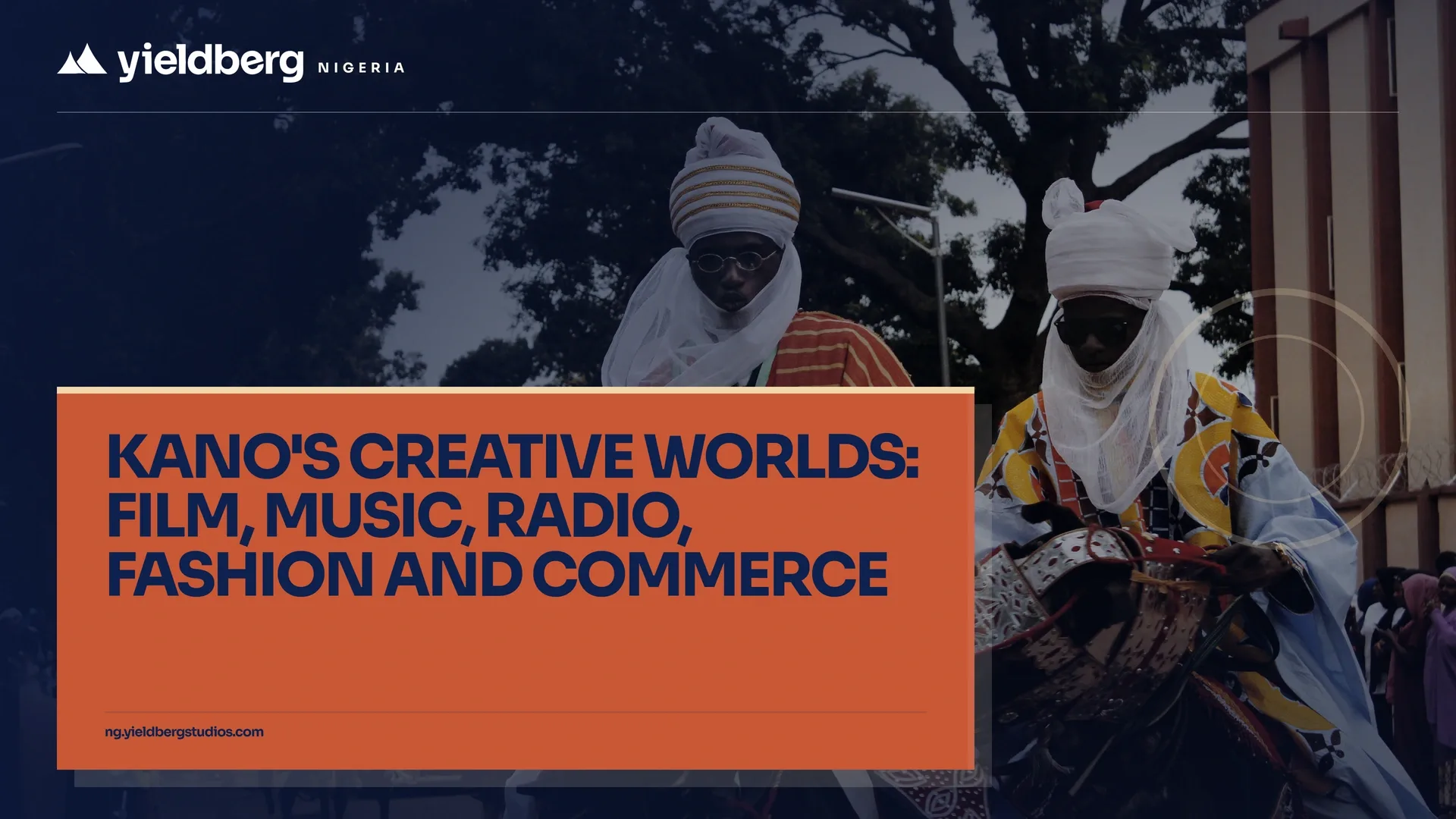
Yieldberg Nigeria editorial cover for “Kano's Creative Worlds: Film, Music, Radio, Fashion and Commerce”.

Kano's Creative Worlds: Film, Music, Radio, Fashion and Commerce

Kano works as a creative ecosystem because film, music, radio, clothing trades, markets and digital media exchange stories, labour, customers and routes to attention. Kannywood is a major node in that system, not shorthand for the whole of it. A serious Kano brief should map how a song reaches radio, how a tailor or textile trader supports a screen production, how a broadcaster commissions talent, and how a digital r

By Isong GodswillRead the story
Yieldberg Nigeria editorial cover for “How Oral Storytelling Lives Inside Modern Nigerian Media”.

How Oral Storytelling Lives Inside Modern Nigerian Media

Oral storytelling lives inside modern Nigerian media when creators adapt performance techniques, not when they merely insert a proverb or label a work traditional. Voice, repetition, gesture, song, direct address and audience response take different jobs in books, radio, film and digital formats because each medium controls time, presence and participation differently. Trace the technique, its function, what the new

By Isong GodswillRead the story
Yieldberg Nigeria editorial cover for “How Nigerian Photography Became a Public Record”.

How Nigerian Photography Became a Public Record

Nigerian photography became a public record through connected acts of making, captioning, circulating and preserving images in studios, royal courts, newspapers, family albums, documentary projects and art institutions. A photograph does not become dependable historical evidence simply because it is old or widely shared. Its value changes when the maker, subject, date, purpose, original caption, custody and reuse rig

By Omodot JacksonRead the story
Yieldberg Nigeria editorial cover for “How the Nigerian Skit Became a Major Storytelling Format”.

How the Nigerian Skit Became a Major Storytelling Format

The Nigerian skit became a major storytelling format when creators did more than shorten comedy for a phone. They combined familiar performance traditions with recurring characters, compressed plots, direct audience feedback, regular publishing and several routes to revenue. The condition that changes this answer is evidence: a viral clip is not yet a format, and a popular character is not yet a durable creative busi

By Isong GodswillRead the story
Yieldberg Nigeria editorial cover for “A Timeline of Recorded Music in Nigeria”.

A Timeline of Recorded Music in Nigeria

Nigeria's recorded-music history has no single beginning. Performers recorded abroad, travelling engineers cut local sessions, labels built studio and pressing networks, traders changed distribution, and platforms turned recordings into files and data. A useful timeline states what each surviving record proves.

By Isong GodswillRead the story
Yieldberg Nigeria editorial cover for “Language Is Production Infrastructure”.

Language Is Production Infrastructure

Language becomes production infrastructure when changing it changes who can perform credibly, what the audience understands, which versions must be made or where the work can travel. Decide those questions before the script and casting are locked, not when somebody asks for subtitles after the final edit.

By Omodot JacksonRead the story
Yieldberg Nigeria editorial cover for “The Nigerian Studio Logbook Archive: Sessions, Personnel and Missing Credits”.

The Nigerian Studio Logbook Archive: Sessions, Personnel and Missing Credits

Recovering the people behind a Nigerian recording requires an evidence chain, not a search for one definitive database. Identify the exact recording and release first, then compare contemporary studio paperwork, physical editions, label records, institutional catalogues and carefully documented testimony. Publish a credit only at the confidence level those sources support.

By Isong GodswillRead the story
Yieldberg Nigeria editorial cover for “Who Regulates What in Nigerian Media and Advertising?”.

Who Regulates What in Nigerian Media and Advertising?

No single regulator clears every Nigerian media or advertising project. Route the work according to what the message claims, where it will appear, whether it collects personal data, which protected material it uses, and whether the product belongs to a specially regulated sector.

By Omodot JacksonRead the story
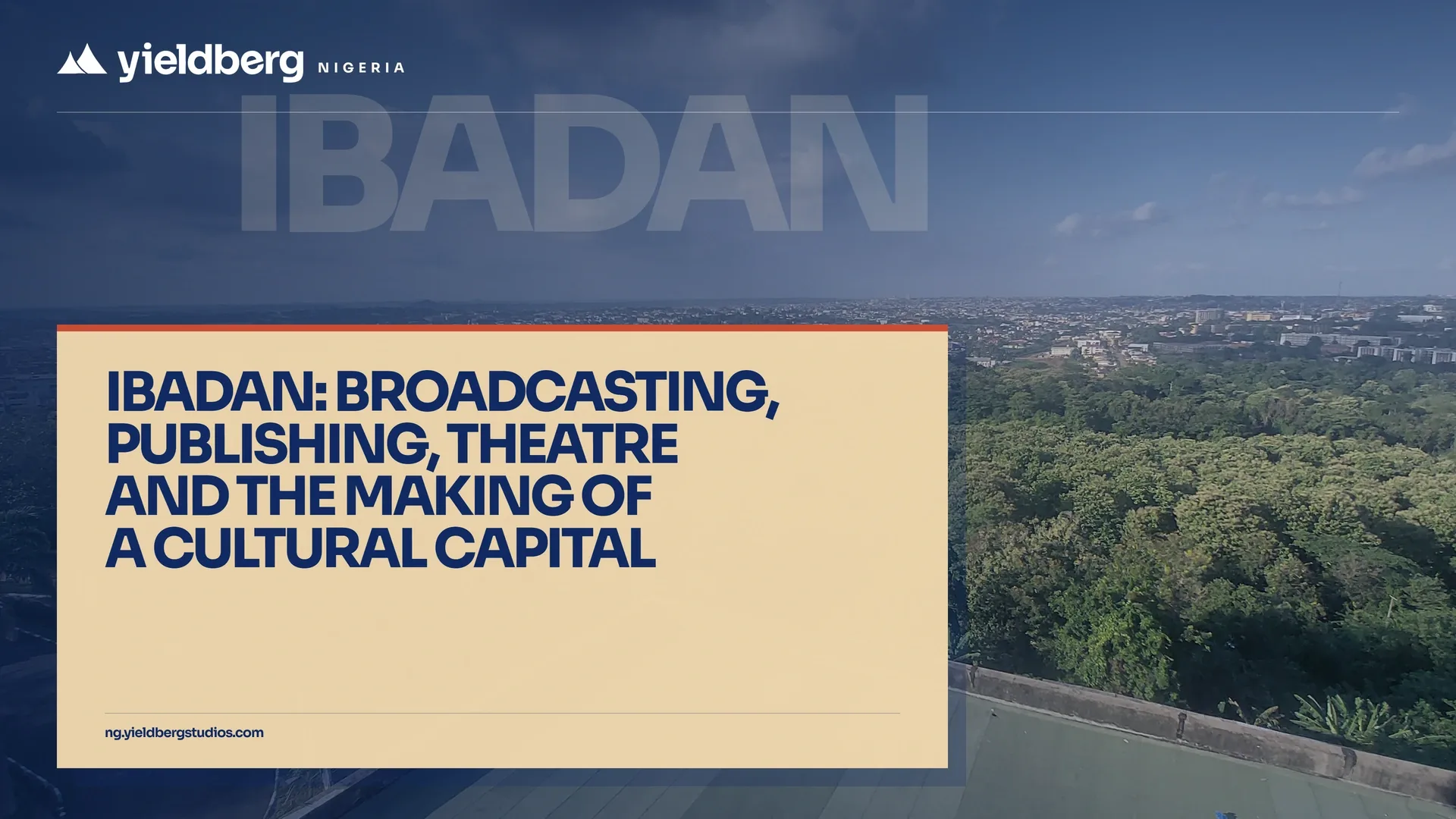
Yieldberg Nigeria editorial cover for “Ibadan: Broadcasting, Publishing, Theatre and the Making of a Cultural Capital”.

Ibadan: Broadcasting, Publishing, Theatre and the Making of a Cultural Capital

Ibadan became a cultural capital because several institutions that normally sit apart were close enough to reinforce one another. A university trained and convened people; newspapers and presses produced texts; theatres developed performers and forms; television carried some of that work into homes; clubs and journals connected local practice to wider African and international conversations.

By Isong GodswillRead the story
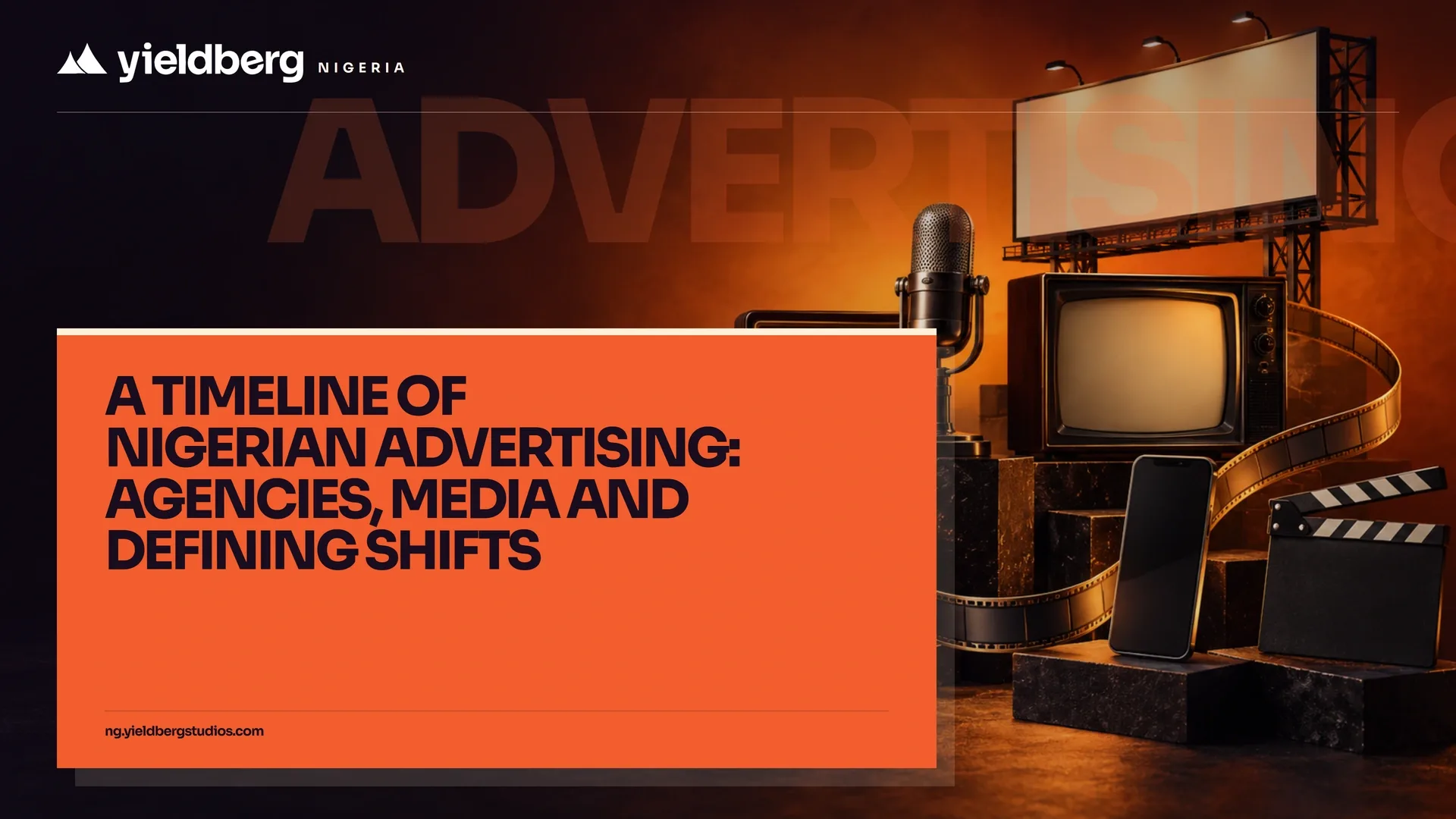
Yieldberg Nigeria editorial cover for “A Timeline of Nigerian Advertising: Agencies, Media and Defining Shifts”.

A Timeline of Nigerian Advertising: Agencies, Media and Defining Shifts

Nigerian advertising did not begin with one agency, jingle or television commercial. It developed through overlapping systems of market speech, print, outdoor display, broadcasting, Nigerian-owned agencies, professional regulation, mobile networks and creator-led media. The safest way to tell the history is to date the change each piece of evidence can prove, without turning a memorable campaign into an unsupported o

By Omodot JacksonRead the story
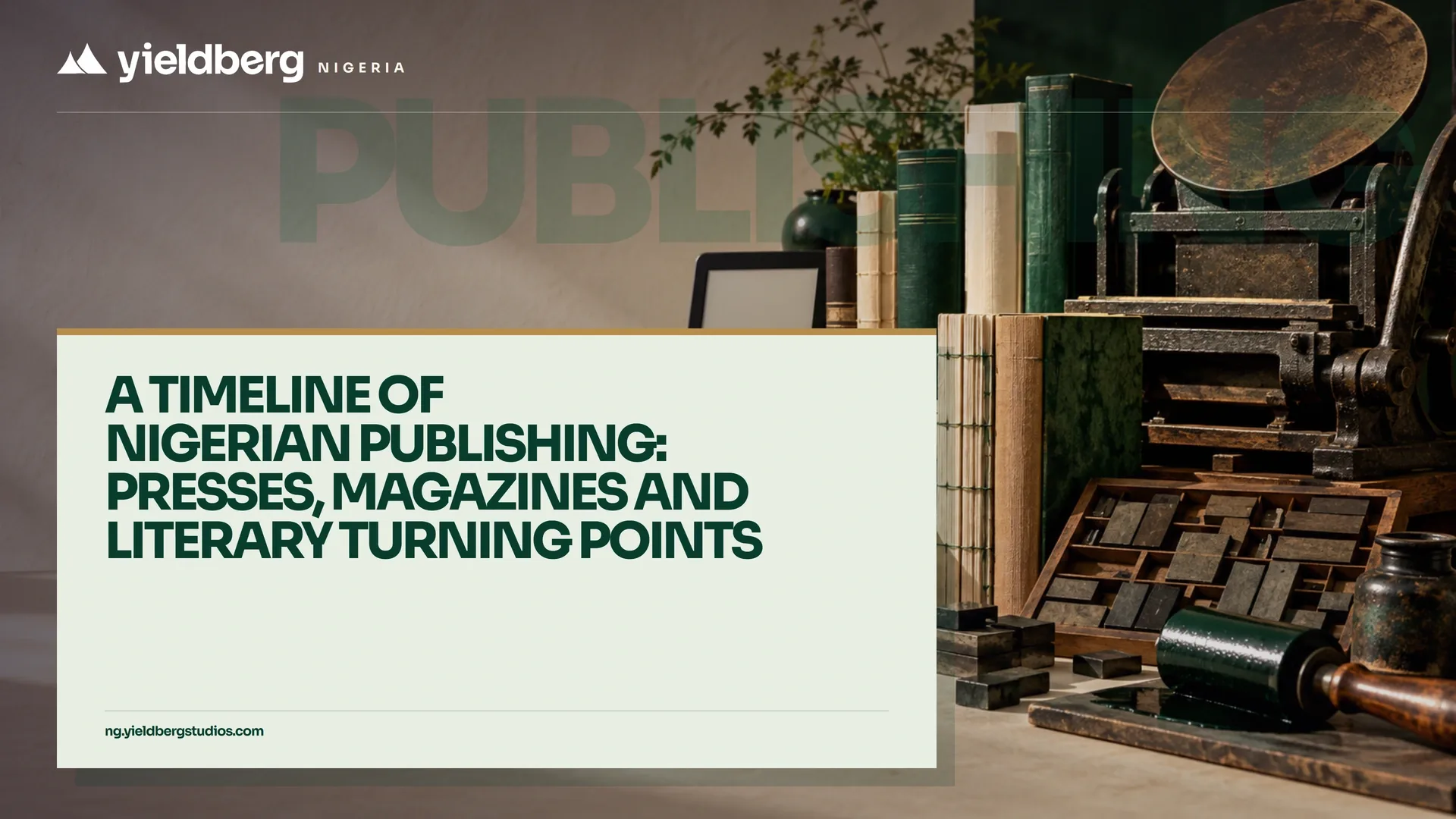
Yieldberg Nigeria editorial cover for “A Timeline of Nigerian Publishing: Presses, Magazines and Literary Turning Points”.

A Timeline of Nigerian Publishing: Presses, Magazines and Literary Turning Points

Nigerian publishing did not develop as a straight march from imported books to local presses and then to digital media. Its history is a set of overlapping systems: educational publishing, market pamphlets, literary magazines, university networks, commercial presses, independent houses, booksellers and archives. A date becomes a genuine turning point only when it changes who can make a text, how it reaches readers, o

By Isong GodswillRead the story
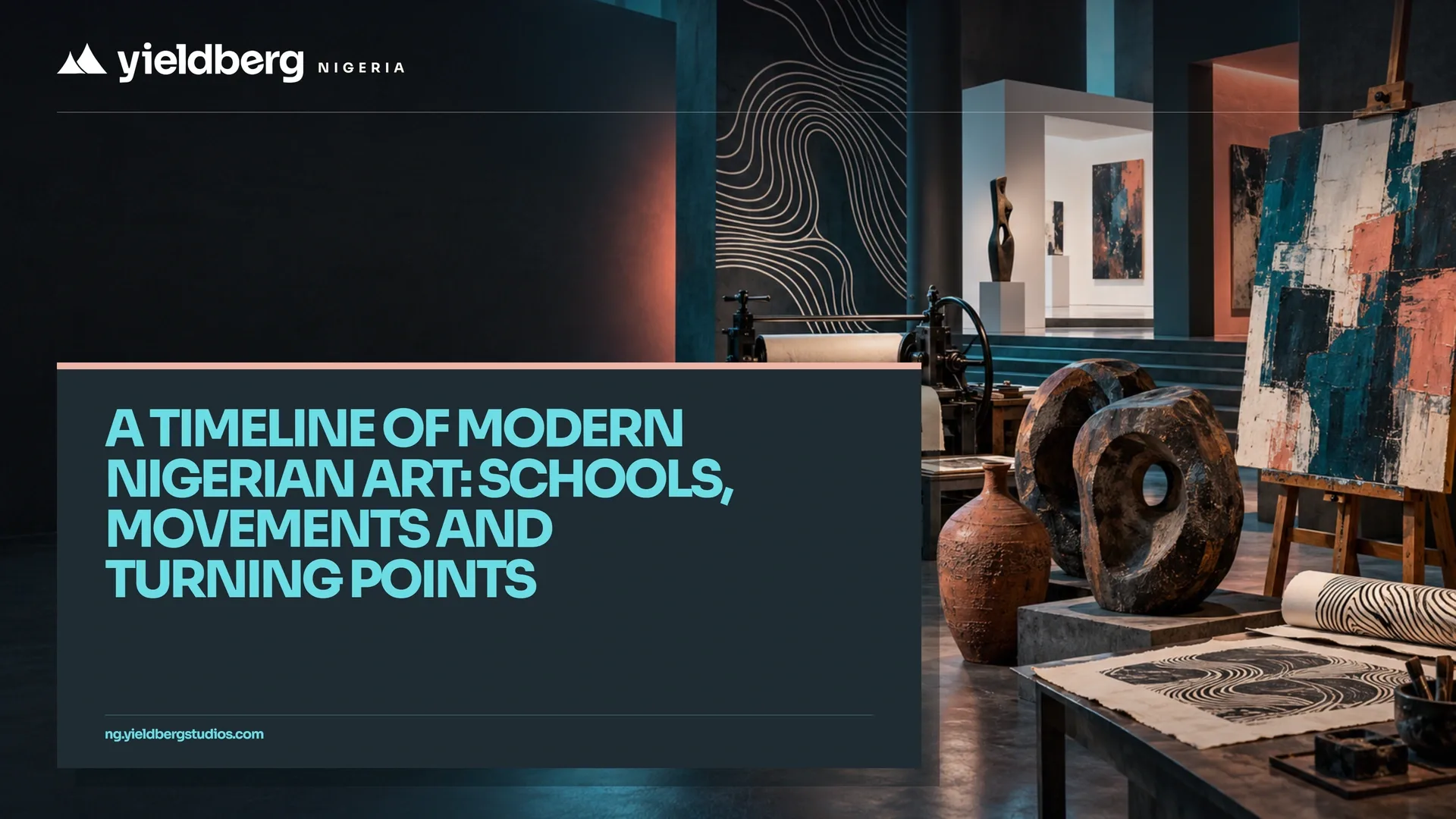
Yieldberg Nigeria editorial cover for “A Timeline of Modern Nigerian Art: Schools, Movements and Turning Points”.

A Timeline of Modern Nigerian Art: Schools, Movements and Turning Points

Modern Nigerian art has no single birthplace or straight line of succession. Its history was made through overlapping routes: indigenous practices, colonial and postcolonial art education, independent societies, experimental workshops, university departments, public institutions, private initiatives and artists working between Nigeria and other countries.

By Omodot JacksonRead the story
Yieldberg Nigeria editorial cover for “Who Counts as a Creator? A Map of Nigeria's Digital-Creative Ecosystem”.

Who Counts as a Creator? A Map of Nigeria's Digital-Creative Ecosystem

A creator is someone who makes or substantially transforms identifiable cultural, educational or informational work and develops a route for that work to reach a public or defined community. The person does not need a minimum follower count, a platform payout or a celebrity name. What changes the commercial decision is the role they perform: making an asset, lending audience access, publishing through an editorial ch
By Isong GodswillRead the story
Yieldberg Nigeria editorial cover for “From Celluloid to Streaming: A Timeline of Nigerian Film and Television”.

From Celluloid to Streaming: A Timeline of Nigerian Film and Television

Nigerian screen history is not a straight journey from celluloid to video and then streaming. It is a history of overlapping systems: cinema exhibition, regional and national television, travelling theatre, celluloid production, home-video markets, pay television, multiplexes, digital terrestrial broadcasting and online platforms. A reliable timeline must show what each change altered, and what it left in place.

By Omodot JacksonRead the story
Yieldberg Nigeria editorial cover for “Afrobeat and Afrobeats: Two Names, Different Histories”.

Afrobeat and Afrobeats: Two Names, Different Histories

Afrobeat and Afrobeats are not singular and plural versions of the same genre. Afrobeat names the musical form that Fela Anikulapo-Kuti's official biography dates to the early 1970s, developed with Tony Allen and other collaborators. Afrobeats became a later umbrella for varied contemporary West African popular music, especially music circulating through Nigerian, Ghanaian and diaspora networks from the 2000s onward.

By Isong GodswillRead the story
Yieldberg Nigeria editorial cover for “How Nigerian Creative Work Travels Across Music, Screen, Fashion and Language”.

How Nigerian Creative Work Travels Across Music, Screen, Fashion and Language

Nigerian creative work travels when a recognisable element is deliberately carried into another medium by a documented collaborator, adaptation, sample, performance, translation or distribution route. The strongest account follows that chain and names who changed what, for which audience and under which credit or permission. If the evidence shows only resemblance, describe a comparison, not an influence.

By Omodot JacksonRead the story
Yieldberg Nigeria editorial cover for “Where Is Nigeria's Television Archive?”.

Where Is Nigeria's Television Archive?

Nigeria's television archive is not one publicly searchable collection. The clearest documented national repository is the National Film, Video and Sound Archives in Jos, while important broadcast material also sits, or may sit, with broadcasters, production companies, creators and estates, public archives, universities, collectors and viewers. Finding a programme therefore requires a custody search, followed by sepa

By Isong GodswillRead the story
Yieldberg Nigeria editorial cover for “The Nigerian Creative Economy: A Map of Work, Money and Institutions”.

The Nigerian Creative Economy: A Map of Work, Money and Institutions

Nigeria's creative economy is not one industry with one revenue figure. It is a set of connected systems in which people create work, supply production services, control or license rights, distribute culture, attract attention and carry financial risk. To plan or evaluate a project, map those flows separately before using a national market-size claim.

By Omodot JacksonRead the story
Yieldberg Nigeria editorial cover for “Lagos as a Creative System: Neighbourhoods, Venues, Markets and Media”.

Lagos as a Creative System: Neighbourhoods, Venues, Markets and Media

Lagos works as a creative system because production, training, markets, venues, finance, technology and media sit close enough to exchange people and ideas. They are not close enough to treat the city as one frictionless cluster. Plan Lagos as a network of specialised nodes, with travel time, access, informal work and unequal infrastructure included in the brief from the start.

By Isong GodswillRead the story
Yieldberg Nigeria editorial cover for “A Field Guide to Nigerian Advertising and Popular Communication”.

A Field Guide to Nigerian Advertising and Popular Communication

Nigerian advertising works as a chain connecting an advertiser, an idea, production, media, regulation and an audience in a particular situation. Treating it as a clever television commercial or social post removes the decisions that determine whether the communication is lawful, culturally legible, properly distributed and commercially useful. The practical recommendation is to design the whole chain before approvin

By Omodot JacksonRead the story
Yieldberg Nigeria editorial cover for “A Field Guide to Nigerian Literature: Languages, Forms and Reading Traditions”.

A Field Guide to Nigerian Literature: Languages, Forms and Reading Traditions

Nigerian literature is best understood as a network of oral, performed, written, printed, broadcast and digital traditions made in many languages for different reading and listening communities. The familiar English-language novel is one important part of that network, not its centre by default. When you commission, teach, publish or report on a work, identify its language, form, route to its audience and community c

By Isong GodswillRead the story
Yieldberg Nigeria editorial cover for “A Field Guide to Nigerian Visual Culture: Art, Photography, Design and Fashion”.

A Field Guide to Nigerian Visual Culture: Art, Photography, Design and Fashion

Do not search for one national look in Nigerian visual culture. Treat art, photography, design and fashion as distinct but connected production systems, then trace each work through place, lineage, labour, circulation and rights. If you are acquiring art, provenance and title may deserve the most attention; if you are commissioning a campaign, the production chain, consent and permitted uses become decisive.

By Omodot JacksonRead the story
Yieldberg Nigeria editorial cover for “A History of Nigerian Internet Culture: Forums, Blogs, BlackBerry, Social Media and Short Video”.

A History of Nigerian Internet Culture: Forums, Blogs, BlackBerry, Social Media and Short Video

Nigerian internet culture did not begin with social media, and it has never belonged to one app. It moved from shared access in cybercafés to pseudonymous forums, personality-led blogs, mobile messaging, public social networks and algorithmic short video. Each shift changed who could participate, what travelled, who controlled discovery and how much of the conversation survived.

By Isong GodswillRead the story
Yieldberg Nigeria editorial cover for “What Is Nollywood? A Working Definition of Nigeria's Film Industries”.

What Is Nollywood? A Working Definition of Nigeria's Film Industries

Nollywood is best used as an umbrella name for Nigeria's commercially organised popular film cultures, especially the industries that grew through video production and Nigerian-led distribution from the late twentieth century onwards. The term becomes too blunt when language, location, regulation, audience or distribution materially changes the story. In those cases, name the specific industry, such as Kannywood or Y

By Omodot JacksonRead the story
Yieldberg Nigeria editorial cover for “A Field Guide to Nigerian Popular Music: Genres, Eras and Crossovers”.

A Field Guide to Nigerian Popular Music: Genres, Eras and Crossovers

The most useful way to understand Nigerian popular music is not as a straight road leading to Afrobeats. It is a network of regional sounds, languages, religious and social settings, technologies, migration routes and commercial labels. Start with highlife, jùjú, apala, sakara, fuji, Afrobeat, gospel, Hausa urban music and hip-hop as distinct histories, then examine the points where musicians combine them.

By Isong GodswillRead the story

Have a brief?

Bring us the ambition.
We’ll build the attention.