
A feature about Rema's Benin homecoming should include people whose work, experience or authority helps answer its specific question, not merely people who make attractive background footage. Keep the artist's account, residents' experiences and institutional claims distinct. If the commission is only a performance report, keep its scope narrow rather than pretending it explains the whole city.
An Edo State Government report published on 3 September 2024 places Rema's homecoming concert at Samuel Ogbemudia Stadium in Benin City on 30 August 2024. It also presents the governor's interpretation of the occasion. That establishes a documented event and an attributed political account, not independent proof of a city's economic or cultural transformation.
Mavin's artist biography connects Rema's background with Benin. It is a label's account of its artist, not permission to make him the sole narrator of everyone else's experience. The reporting challenge is to connect a public career with a place while allowing that place to remain more than a celebrity origin story.
Decide which homecoming story you are making
There are at least three different commissions hidden inside the phrase “homecoming feature”. A performance report examines the event. A career feature asks how the artist relates to his background. A city-led feature investigates what selected local people made of the occasion.
Choose one main question before booking interviews. A short performance report does not need a complete urban history. A city-led documentary needs more than a performance montage and a governor's speech. An artist-led account can stay personal if it does not claim to represent all residents.
For a Benin story, do not substitute a generic Lagos-based production network for relevant local knowledge. That does not mean every crew member must live in Benin. It means the producer must identify which decisions depend on knowledge of the actual location, language, institution or participants and obtain that knowledge appropriately.
Also distinguish Benin City from Edo State and from all Edo people. Those boundaries matter when an event in one venue becomes a claim about a wider population. Use the smallest location description the evidence supports.
Use the Place-and-Perspective Brief
The Place-and-Perspective Brief is an editorial approach proposed here, not a community protocol or an established production standard. It gives every contributor a defined evidential job and records what they cannot establish.
| Contributor | What they may help explain | Boundary to preserve |
|---|---|---|
| Artist or authorised representative | The artist's intention and documented choices | Cannot establish every resident's response. |
| Event organiser and venue representative | Production arrangements, access and available event records | Promotional descriptions are not independent impact findings. |
| Credited local creative collaborators | Work they personally performed and how it entered the production | One collaborator does not represent the city's creative sector. |
| Consenting attendees | Their own attendance, interpretation and experience | Personal enthusiasm does not establish population preference. |
| Relevant non-attendees | Why this particular event did or did not matter to them | Absence is not automatically dislike or exclusion. |
| Appropriate language or cultural reviewer | Specific wording, references and contextual risks | Expertise is bounded; no automatic authority over every tradition. |
| Producer and editor | Evidence, fair assembly, permissions and the final argument | Editorial control does not create access or consent. |
The researcher should document why each person fits the question. Do not choose a resident solely because they will deliver a dramatic endorsement. Do not choose a cultural reviewer merely because their title sounds impressive. Ask what experience or mandate qualifies them for the actual material.
Give local collaborators a role before giving them a credit
If the feature uses a local fixer, researcher, translator, photographer or producer, involve them while the argument is still changeable. Otherwise their contribution may be reduced to locating attractive scenes for a conclusion already written elsewhere.
Agree responsibilities, compensation, credit, availability and review boundaries. Specify whether travel, transport, equipment and additional versions are included. These are proposed working arrangements, not claims about standard Benin production rates.
Ask collaborators which assumptions need investigation. Is a location description accurate? Does a proposed image imply access or endorsement that has not been granted? Does narration turn one person's account into a statement about a whole community? Record the answer and any unresolved disagreement.
The Brief's specific-stage approach to filming cultural performance offers a related principle: identify the actual people and decisions involved rather than inventing a universal cultural authority. Do not transplant Kwagh-Hir protocols into Benin; use the article to understand the need for locally appropriate participation.
An annotated commissioning brief
The following is an illustrative proposal, not a report of interviews, local consultation or permissions already obtained.
Working question: What can a carefully bounded account of one homecoming event reveal about the relationship between an internationally visible artist and selected people working or living in his hometown?
Format: A written feature supported by a short commissioned visual piece, if permissions and resources allow. This is an assumed format choice, not an existing production.
Required distinctions: Event facts; the artist's attributed account; an organiser's records; individual experiences; and the editor's interpretation. Each should remain identifiable in the finished work.
People to approach: The relevant artist representative and organiser, credited local production contributors, consenting attendees and a small number of relevant non-attendees. Recruitment follows the question, not a claim of representativeness.
Local review: Commission appropriate review of place descriptions and any language or cultural references used. Record what the reviewer checked and what remains outside their expertise.
Excluded claims: Unverified attendance totals, invented spending, assumed income for traders, national audience preference and claims that the concert caused a wider creative revival.
Publication condition: Every material factual statement must have a suitable source; every recorded contribution must have an agreed use; unresolved claims must be narrowed, attributed or removed.
This brief gives the producer an actual decision process. It also preserves the possibility that reporting will produce a less celebratory, more complicated or simply narrower story than the initial concept.
Separate an event from an impact study
A concert can be documented without proving its economic effect. An organiser's sales records, an attendee's excitement and a trader's account answer different questions. They should not be assembled into an unsupported claim that the whole city benefited.
If a commercial-impact question is central, specify the population, period, costs and comparison needed. A vendor's reported takings are not automatically profit, and an increase in activity during an event does not establish what would have happened without it.
Illustrative arithmetic: assume a participating vendor reports ₦100,000 in sales and ₦70,000 in directly recorded costs for a defined event period. The difference is ₦100,000 − ₦70,000 = ₦30,000. All figures are assumed. That difference excludes any unrecorded overhead and does not establish incremental profit, citywide benefit or the artist's causal contribution.
To make a stronger claim, the researcher would need a suitable baseline, comparable records and a method accounting for other changes. If those are unavailable, write about the vendor's attributed experience, not a verified economic multiplier.
Do not turn access into unlimited reuse
Before recording, explain the project, likely outputs, interview language, publication channels and any sponsor involvement. Separate an interview from a promotional endorsement. A resident agreeing to discuss an event is not automatically agreeing to appear in an unrelated paid advert later.
Identify venue access, event footage, music, photographs and third-party material separately. Public circulation does not settle your intended use. Obtain qualified Nigerian advice where rights, commercial reuse, children or disputed authority require it.
For ordinary participants, avoid unnecessary home addresses, travel histories or personal details. A person can explain their relevant experience without becoming a complete public profile. Keep the agreed review scope practical: factual correction, translation accuracy and use restrictions need clear deadlines and owners.
Plan versions without making the city decorative
If you publish clips, preserve enough context that a resident's account is not converted into a sweeping endorsement. Give every derivative an identifiable source and review it against the full feature's claim boundaries.
Do not replace a collaborator's specific contribution with a generic caption such as “local talent”. Use their preferred verified name and role where agreed. If an image is included for atmosphere, describe it accurately rather than implying it depicts the concert or a contributor's own workplace.
Decide what must survive on a small screen, including credits and qualifications. The Brief's viewing-conditions guide helps you choose formats from actual use conditions rather than assumptions about Nigerian audiences.
Reach a reporting decision over three weeks
- Week one: the editor chooses one question. The producer completes the contributor map, confirms available resources and approaches relevant local collaborators. The researcher verifies basic event records.
- Early week two: agree participation, access, language review and permitted uses. Record interviews only after those arrangements are understood. Allow more time for unavailable participants.
- Late week two: separate testimony from factual claims, check disputed details and assemble a paper draft. Identify the material each contributor actually supports.
- Week three: complete the agreed factual, translation and permissions reviews. Inspect every caption and derivative against the claim boundaries.
- At the commissioning review: publish the bounded feature, narrow it to a performance report, extend reporting or stop. Do not invent missing local perspectives to meet a deadline.
Three weeks is a proposed development window, not a guarantee of artist access. The observable result is a traceable story in which Benin's relevant contributors have meaningful roles. The city does not need to become a backdrop, and the artist does not need to become its universal spokesperson.
Sources and verification
- Edo State Government, homecoming report: 3 September 2024. Supports the recorded venue, event date and attributed government framing. It is not an independent impact assessment. The full report was accessible through web retrieval on 18 September 2026 despite direct-request access errors.
- Mavin, Rema artist biography: official label page, undated, checked 18 September 2026. Supports the label's description of Rema's Benin background, not broader community representation.
- Internal reading destinations were checked on 18 September 2026. No artist, organiser, collaborator, attendee or resident was interviewed. The brief, contributor map, assumed arithmetic and schedule are original editorial proposals.
Next decision: Plan the collection and verification of personal accounts.
Cover photo credits
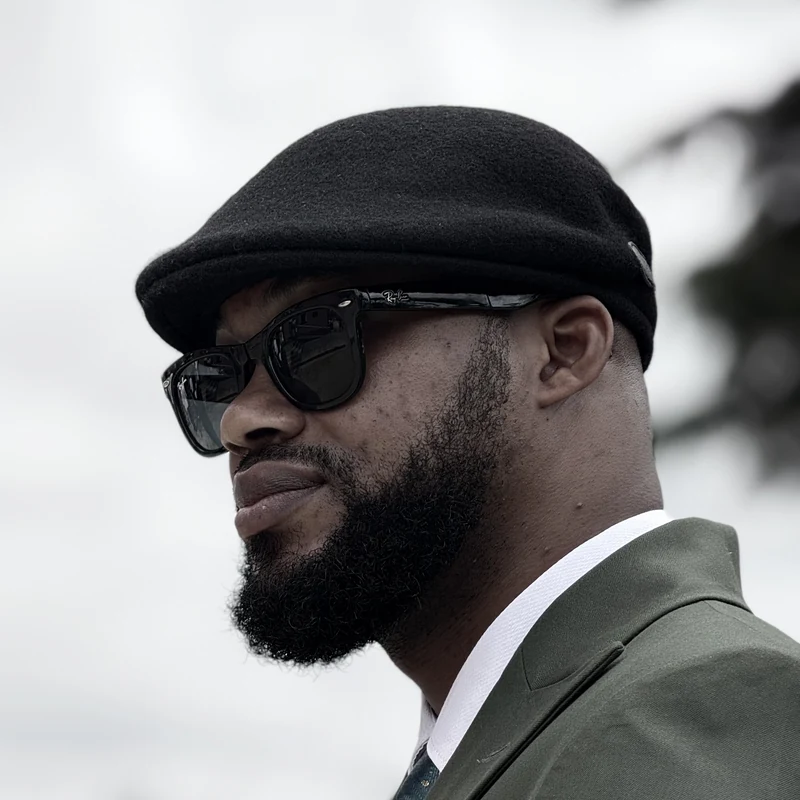
Rema: The Alfe / Thealfe Studios (source photograph, CC BY-SA 4.0). Editorial cover illustration; portrait framing and composition adapted from the credited sources.
Related reading

 By Isong Godswill

 By Omodot Jackson
