
Present an archive interview as a statement made in its original circumstances, not as evidence of what the celebrity believes now. Identify the question, recording or publication date, surrounding answer and any verified later clarification that materially changes the interpretation. If the original interview cannot be located, do not build a decisive claim from a circulating fragment.
An old clip can become newly relevant without becoming newly recorded. A musician discussing one album, an actor describing an early contract or a host responding to a particular disagreement may appear to address a current event when the date and question disappear.
Your responsibility is to preserve the distance between then and now. That distance is often the interesting part of the story: a change in responsibility, a revised view or a different situation. Removing it can manufacture a contradiction that the evidence does not establish.
Ask why the archive belongs in this article
Write the present editorial question before selecting the dramatic quote. Are you explaining how a format developed, comparing creative priorities or documenting a historical statement? Each purpose requires different evidence.
If the purpose is simply to provoke reactions, the fragment may be doing more harm than explanatory work. Do not use an old statement to imply knowledge of later events that the speaker could not have possessed.
The broader distinction between recollection and verified fact is developed in Collecting Nigerian TV Memories. An archive quotation adds another requirement: the editorial meaning of the selected excerpt must remain faithful to the source passage.
Use the Then-Now Context Record
The Then-Now Context Record is an editorial method for deciding whether an old quotation supports a present article. It is not a legal clearance system or a guarantee of fairness. Its five fields are source, original exchange, time, changed circumstances and public framing.
Create the record before editing a video or writing the headline. The researcher establishes provenance, the writer explains relevance and the editor checks the final impression. When one person performs all three tasks, complete them in separate passes.
Source: find the fullest available original
Record the publisher, programme, interviewer, episode or item title and original source address. Identify whether you have the complete interview, a publisher's excerpt or a later repost. Keep the relationship between versions visible.
Compare identifying details, not only faces and voices. A familiar watermark may belong to an uploader rather than the original production. A video caption may have been added years later. The date shown on a current post dates that upload unless the record establishes something else.
Search through professional publishers, production records and authorised archives before relying on a compilation. If the original is unavailable, state the limitation and decide whether the passage is essential. Missing provenance is not a challenge to overcome with confident narration.
Original exchange: retain the question and answer
Transcribe the relevant question, the full answer and enough surrounding exchange to understand references such as “that”, “at the time” or “with that team”. Log interruptions, laughter and any explicit qualification that changes the answer's meaning.
Reuters' published quotation guidance emphasises preserving a quotation's sense and providing its circumstances. This is a professional reference, not a Nigerian statute or a requirement that every excerpt reproduce an entire interview.
You may shorten a passage for a clear editorial purpose, but the selected portion must not reverse the answer. If removing the question makes a hypothetical statement sound like a confession, retain the question or paraphrase the exchange accurately instead.
Distinguish the interviewer's proposition from the speaker's words. “The host asked whether…” and “the performer said…” are different claims. A thumbnail or caption can erase that distinction even when the body of the article is careful.
Time: identify which date you know
Recording, first broadcast, first publication and reupload may have separate dates. Use the most relevant verified date and name its type. If only publication is confirmed, do not describe it as the exact moment the words were spoken.
Avoid “recently” in an evergreen archive feature. A visible date is more durable and gives the reader information rather than an impression. If a precise day is unknown, use the supported month, year or range.
BBC's publicly available Section 03 accuracy guidance addresses misleading archive use and visible publication dating. This is an archived professional document, not a claim about the BBC's current complete policy or Nigerian regulation.
Changed circumstances: check what followed
Search for relevant later clarification, a new role or a materially different context. You are not required to attach every subsequent interview. You are required to avoid presenting an answer as settled present opinion when available evidence directly qualifies that interpretation.
A later statement may genuinely differ. Explain the difference using matched questions and circumstances. Do not call someone inconsistent merely because a comment about their first independent production differs from an answer about a later commissioned series.
If you seek clarification, ask a bounded question through an appropriate professional channel. Identify the original item and the interpretation you are considering. Record the request and deadline. No response does not verify your interpretation or prove the person refused to explain.
Public framing: examine every surface
Review headline, opening paragraph, cover, caption, transcript and social extract. They should carry the same essential temporal context. A careful sentence deep in an article cannot repair a promotional card that says “Actor reveals…” over footage recorded years earlier.
Use an archive label where the reader will encounter the material, not only in a source list. For a short video, test whether the date and original subject remain readable before the quoted words begin. For a written feature, place them beside the quotation or in the immediately preceding sentence.
An annotated record before you cut
Illustrative scenario: a fictional Nigerian actor discussed conditions on an early television project in an interview published several years ago. A new uploader labels a fragment as a comment on a current streaming production. The actor, statements and situation below are invented; they concern no identifiable person or programme.
| Field | Illustrative working entry | Publication consequence |
|---|---|---|
| Source | Original publisher's full interview located; later repost omits the introduction. | Link to the original rather than using the repost as primary evidence. |
| Question | The host asked about the actor's early television work. | Identify that subject before quoting the answer. |
| Time | Publication year verified; recording day not established. | Say “in an interview published in the verified year”, not “today” or an invented recording date. |
| Qualification | The actor distinguished that production from later work. | Retain or faithfully explain the distinction. |
| Present relevance | The current article examines how working responsibilities change. | Compare the roles only with additional evidence; do not allege a new dispute. |
| Final frame | Archive date and programme context appear beside the passage. | Reject a cover implying a current revelation. |
The practical contribution is a decision record, not a dramatic before-and-after compilation. It gives an editor reasons to publish, revise or omit the extract.
Treat translation as an editorial decision
Nigerian interviews can move between English, Nigerian Pidgin and other languages. Terms of address, teasing, indirectness and culturally specific expressions may alter how a quotation reads. Do not clean every informal phrase into a sharper English accusation.
Retain the original-language passage and ask a competent reviewer to explain the function as well as the literal wording. Tell the reviewer whether the output is a quotation, subtitle or summary. Where ambiguity remains material, prefer an attributed explanation over a falsely precise translated quote.
Do not infer the speaker's ethnicity or intended national audience from one language choice. Nor should you treat a viewer unfamiliar with the programme as less Nigerian. The context choices for nostalgia videos provide a useful way to distinguish prior exposure from age or location.
Separate editorial fairness from permission
An accurate quotation can still involve questions about reproduction, footage, sound, performance and the relevant agreement. Decide whether your article needs the clip itself or whether a description and a source link serve the purpose.
If you propose reproducing material, identify the exact extract, placements and treatment. Seek appropriate permission or qualified Nigerian advice on the applicable position. Attribution is part of responsible presentation, not an editorial substitute for that review.
Keep the original source record, transcript, edit decisions, translations and usage correspondence together. Restrict sensitive contact or agreement information rather than putting it into public research notes. Preservation beyond the final export explains why maintaining context matters when another person later revisits an edit.
Resolve a small archive feature in one working week
- Day one: the researcher writes the present editorial question and locates the fullest original. Stop if the central claim depends on provenance you cannot establish.
- Day two: transcribe the exchange, separate date types and complete the Then-Now Context Record.
- Day three: check relevant later statements and request focused clarification where necessary. Begin translation review and any proposed media-use assessment.
- Day four: draft or edit with visible archive framing. A second reader checks whether the selected passage still means what it meant in context.
- Day five: approve the headline, caption and promotional extracts together. Publish only if provenance, meaning, relevance and proposed use support the chosen format.
This is a proposed schedule for a small, accessible item. Extend it for archives, replies, language review or specialist advice. At the decision point, omit the passage if missing context is material; do not publish first and hope the comment section finds the source.
Questions before release
Does a later clarification mean the original quote should disappear?
Not necessarily. A historical feature can explain both. The mistake is suppressing relevant later evidence while presenting the earlier answer as current opinion. Keep chronology and attribution clear.
Can I quote a public clip without contacting the celebrity?
Contact is not the only editorial question. You still need provenance, fair context, accurate wording and an appropriate assessment of any reproduction. Seek clarification when the proposed interpretation is consequential or uncertain. Do not imply a fresh interview occurred.
Sources and verification
- Reuters, “Standards and Values”, undated. Supports the short reference to faithful quotations and context; not Nigerian law.
- BBC, “Section 03: Accuracy”, an undated archived guidance PDF. Supports the limited archive-framing reference. It is not represented as the BBC's current complete guidelines.
- External sources and the three linked Yieldberg articles checked on 18 September 2026. No real celebrity quote, newly conducted interview or cleared extract is presented. The context record and scenario are editorial examples.
Next decision: organise memories and checkable historical claims through Collecting Nigerian TV Memories.
Cover photo credits
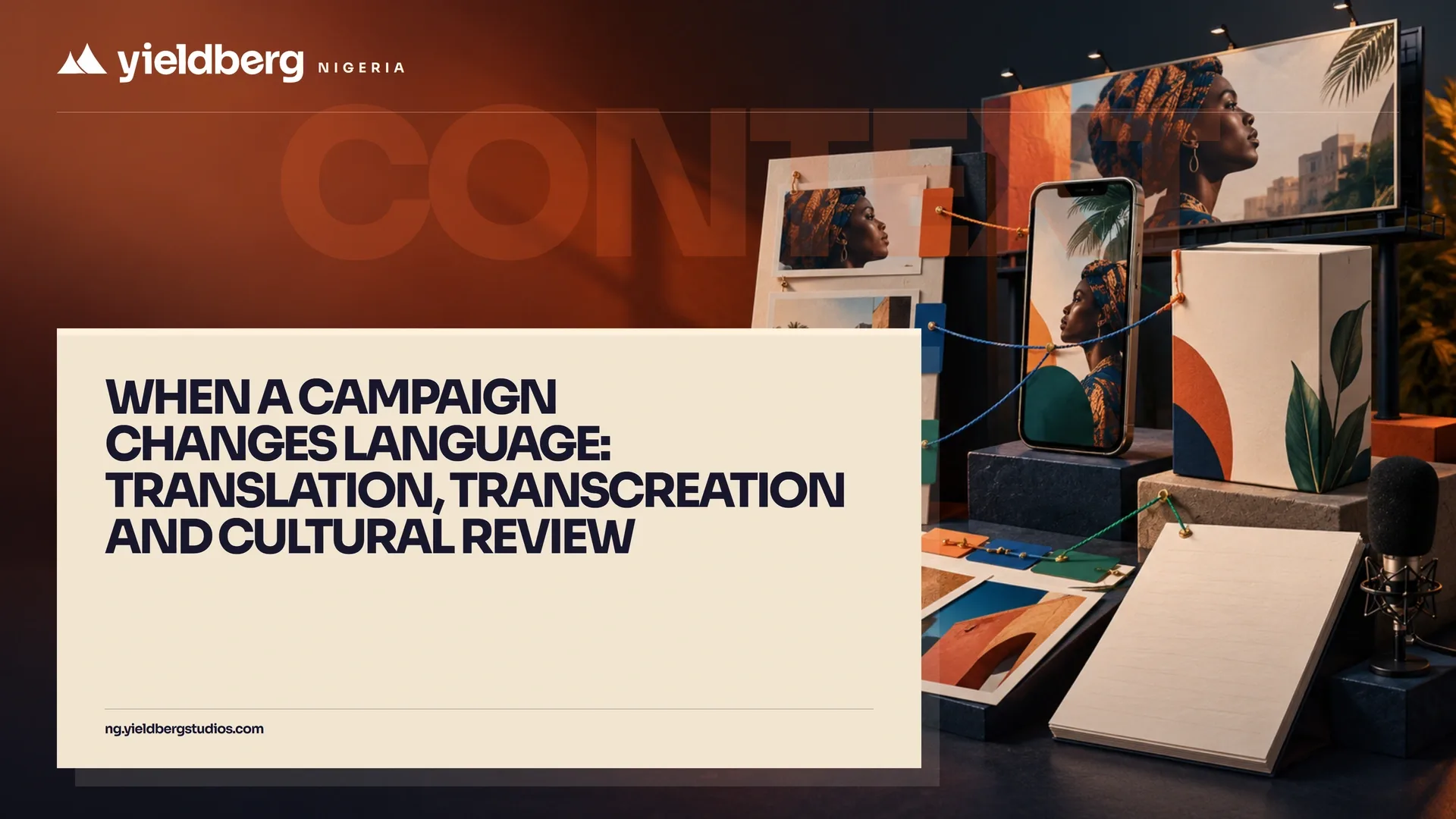
Funke Akindele: Ameyaw Debrah (source photograph, CC BY 3.0). Nancy Isime: Kaizenify (source photograph, CC BY-SA 4.0). Editorial cover illustration; portrait framing and composition adapted from the credited sources.
Related reading
 By Omodot Jackson

 By Isong Godswill

