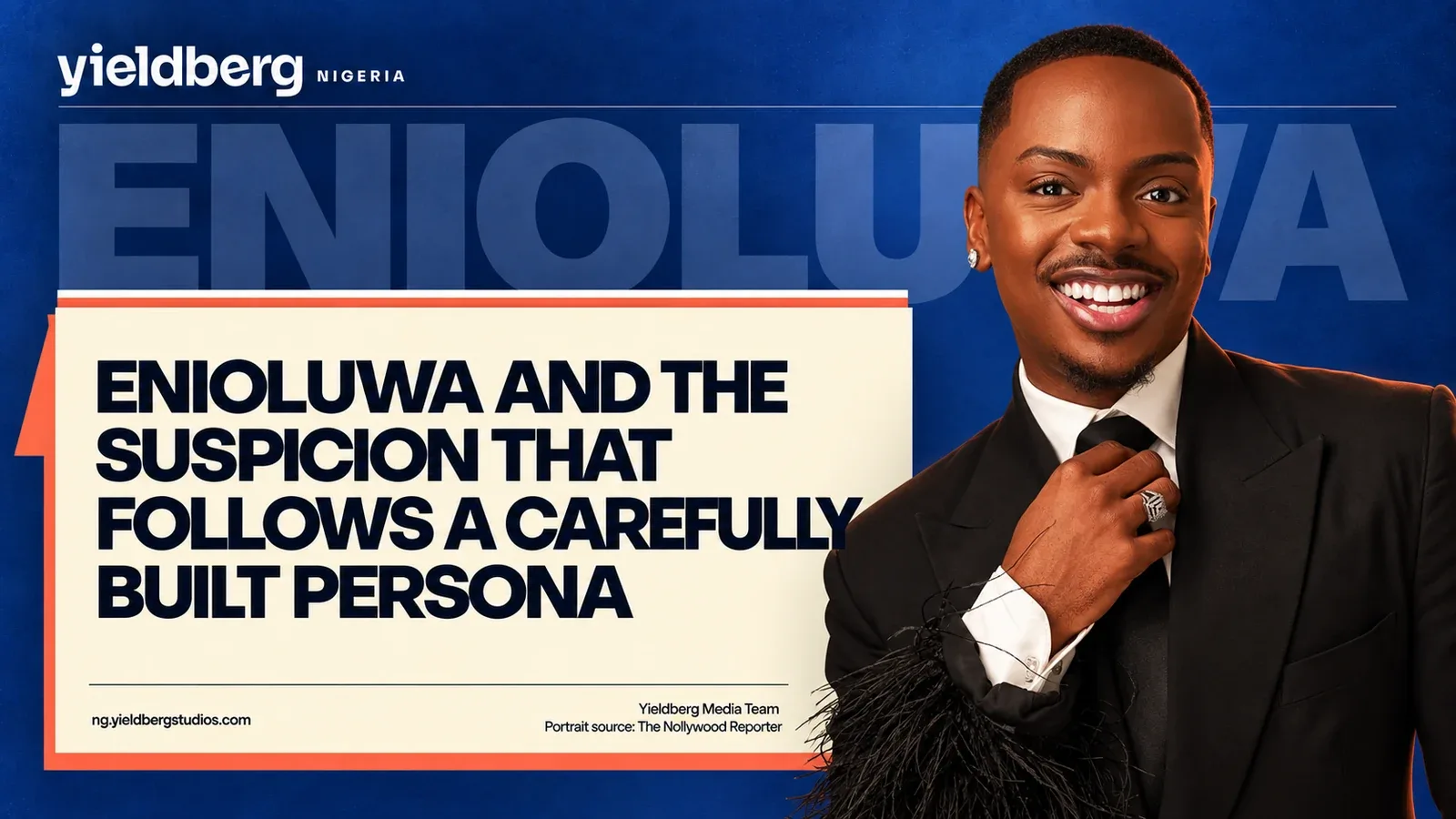
Enioluwa Adeoluwa's polish does not prove that his warmth is false. It proves that a public-facing creator understands performance, production and brand consistency. Supporters can enjoy the food, fashion, friendship and educational parts of that persona while sceptical viewers question whether a collaboration feels too managed. The useful test is not “Is this the real Enioluwa?” It is “What claim is this post making, who paid for it and does the visible evidence support it?”
That distinction protects audiences from deceptive advertising without pretending that strangers can know a creator's private self from a feed.
A recognisable persona built across several lanes
Enioluwa Prince Adeoluwa, widely known as Enioluwa or Eni, is a Nigerian creator, actor and producer whose work crosses beauty, fashion, food, entertainment and youth-focused projects. His public X profile shows the mixture in one place: campaign work sits beside everyday observations, food, books and entertainment promotion.
In a June 2025 Punch interview, Adeoluwa described content creation as strategic work, discussed the evolution from his earlier lip-gloss format and said brand advertising was an important part of the business. It is a first-person career account, not an independent audit of his campaigns, but it makes one point clear: production strategy is not hidden from the public story.
Industry lists also establish relevance. The 2025 Trendupp Awards included Enioluwa in its Force of Influence category, while the New Media Conference's 2025 honourees placed him in social media and community building. These selections show professional recognition, not representative approval.
The public-purpose lane has current evidence too. QED reported in September 2026 that Eni's Book Club inaugurated a writing prize for public secondary-school students in Ekiti. That action gives followers another way to interpret the persona: polish can carry a concrete literacy programme, not only a commercial message.
How this article sampled public response
The Yieldberg Brief reviewed accessible public material from 27 September 2025 to 26 September 2026. It included public X posts and visible replies, accessible TikTok profile pages, Facebook publisher posts, current Nigerian reporting and creator or award sources. Earlier interviews were used only to explain established format and business context.
X exposed partial threads and ranked material through search. Facebook and TikTok did not expose complete logged-out comment histories. We did not access private accounts, infer a commenter's gender or class from a profile, or calculate positive and negative percentages. Entertainment articles that quoted reactions were treated as curated selections. A few highly shared comments cannot establish what Nigerians generally think.
Within those limits, three response frames were visible: warmth and aspiration, admiration for versatility, and suspicion that an extremely polished interaction or friendship is content first. The third frame is useful only when it identifies a public claim, sponsor or format. It becomes invasive when it tries to determine sexuality, romantic status or private motive.
Why warmth and polish work together
Enioluwa's content often makes high production feel conversational. Food offers sensory immediacy. Fashion gives colour and transformation. Collaborations provide familiar relationships and repeat characters. A careful visual identity helps audiences recognise all three as part of the same creator brand.
This breadth has commercial logic. A 2023 Rest of World profile examined why international fashion and beauty brands had worked with him and placed his appeal within Nigeria's creator economy. The reporting is older than the sentiment window, but it helps explain the established positioning against which newer partnerships are judged.
Warmth also reduces the distance between aspirational products and everyday talk. A meal, joke or friend's appearance can make a paid message feel less formal. That is not automatically deceptive. It becomes a trust problem if viewers cannot tell where the ordinary scene ends and the commercial claim begins.
Why careful construction can attract suspicion
Audiences know that creators earn through sponsorship. Suspicion grows when several campaigns use the same affectionate tone, when a product appears inside a friendship scene without clear labelling or when the caption asks viewers to treat performance as spontaneous evidence.
The reasonable criticism is specific: the sponsor was hard to identify; a benefit was asserted without support; the relationship between the creator and event was unclear; or the content format felt repetitive. Each can be answered through disclosure, evidence or programming.
The unreasonable version makes identity the accusation. Polished dress, beauty interest, emotional expression or close friendship can attract gender-coded judgement. Speculation about Adeoluwa's sexuality or private relationships is not a valid counter-position on campaign credibility. Neither is class resentment expressed as an unsupported allegation about how opportunities were obtained.
A brand listening report should retain a comment that says, “I could not tell this was an advert until the final frame.” It should exclude a slur aimed at masculinity. Both may be negative in tone, but only one helps improve the work.
The Polish-Trust Split Test
The Polish-Trust Split Test is an editorial method developed for this article. It separates the quality of the performance from the evidence behind the promise.
| Content element | Production question | Trust question | Decision signal |
|---|---|---|---|
| Food reaction | Is the moment spontaneous, repeated or edited for pace? | Is the creator making a taste preference or a factual nutrition claim? | Preference needs honest context; health claims need appropriate evidence |
| Fashion look | Do styling, lighting or filters materially alter the product? | Can a buyer identify the actual garment, price and sponsor? | Publish when the product remains intelligible and disclosure is early |
| Friendship scene | Is the relationship being used as narrative? | Is a brand placement or scripted beat clear to viewers? | Label the commercial role without asking friends to prove private intimacy |
| Public-purpose project | Does the video centre the creator or the programme? | Are eligibility, organiser, dates and promised benefits verifiable? | Link to operational details and report delivery later |
| Personal opinion | Is the polished delivery making a claim feel authoritative? | What experience or source supports the claim? | Separate personal view from expert guidance |
| Brand advert | Does it resemble ordinary content closely? | Can a viewer recognise the sponsor before acting? | Revise if the disclosure arrives after the persuasive claim |
The method does not penalise high production. It asks whether production clarifies or disguises the thing a viewer must judge.
Read each platform on its own terms
On TikTok, a creator can move quickly between food, style, humour and collaboration. Recommendation-driven distribution means a viewer may meet one clip without knowing the longer persona. Disclosure and context need to work for that first encounter.
On X, a short statement or extracted video can become a debate about authenticity, privilege, gender or social responsibility. Replies frequently address the identity projected by the repost rather than the full original content. Analysts should preserve the source post and distinguish criticism of the message from criticism of the person.
Facebook publisher pages add a headline and selected frame. A warm scene can become a relationship story, while a campaign can become celebrity news. Reactions under that publisher frame should be labelled separately from responses on Adeoluwa's own page.
Combining all engagement into one sentiment number would mix different units and double-count overlapping users. Platform context is part of the finding.
What creators and brands should change
Adeoluwa's team can make planning visible without making content cold. “Paid partnership”, event-host role, invited access and affiliate relationships should appear before the persuasive moment. A friendship or family scene can remain entertaining without being offered as documentary proof of private closeness.
Brands should choose the part of the creator portfolio that serves the brief. Food reach does not automatically make a creator credible for health guidance. Fashion fluency does not automatically support every luxury claim. Educational or social-impact work should be assessed through delivery and beneficiary information, not halo alone.
Researchers should code reactions by object: performance, disclosure, claim, sponsor fit, public conduct or identity-based abuse. This prevents a comment about overproduction from becoming a verdict on character, and prevents a fan's affection from being treated as purchase intent.
Moderators should preserve good-faith scepticism. Removing every critical comment can make an already polished campaign feel more controlled. Slurs, threats, doxxing and private-life speculation should be removed because they contribute nothing to product understanding.
A ten-day campaign-fit audit
- Days 1 and 2: name the credibility lane. State whether the brief depends on food enjoyment, fashion presentation, entertainment, education or community-building work.
- Day 3: write the exact claim. Separate preference, experience, product fact and expert advice. Require evidence appropriate to each.
- Days 4 and 5: mark the commercial boundaries. Identify the sponsor, gifted access, event role, script and any affiliate action before editing begins.
- Day 6: review the persona dependency. Ask whether the concept still works without implying that a friendship or private identity proves the product.
- Days 7 and 8: test by platform. Show the TikTok cut, X excerpt and likely Facebook frame to separate fresh viewers. Record what they think is sponsored and promised.
- Day 9: prepare moderation. Keep claim-based criticism, answer confusion and remove gendered or private-life abuse.
- Day 10: decide. Proceed if viewers can identify the sponsor and evidence. Revise if polish obscures either. Decline if the idea requires speculation about private life.
The decision point arrives before publication, not after scepticism has already attached to the campaign.
Related reading
Frequently asked questions
Is a carefully built persona dishonest?
No. A persona is an edited public presentation, as nearly all media performance is. Dishonesty depends on a false or concealed material claim, not on planning alone.
Why do some viewers distrust polish?
Polish can make repeated brand messages feel interchangeable and can conceal where performance ends. The answer is stronger disclosure and specific evidence, not a staged attempt to look careless.
Is criticism of Enioluwa always gendered?
No. Viewers can reasonably question a public statement, sponsor, disclosure or creative choice. Criticism becomes unusable when it relies on gender policing, sexuality speculation or slurs rather than the published work.
Can friendship content support a campaign?
Yes, if the commercial role is clear and the campaign does not ask viewers to treat private closeness as verified product evidence. Consent and disclosure apply to every participant.
What is the strongest measure of trust?
Ask whether viewers correctly identified the sponsor, repeated the intended claim and could distinguish opinion from evidence. Familiarity and engagement are weaker substitutes.
Sources
- Enioluwa's public X profile, accessed 26 September 2026
- Punch: Enioluwa Adeoluwa on content strategy and criticism, 21 June 2025
- QED: Enioluwa Adeoluwa inaugurates essay prize in Ekiti, 3 September 2026
- New Media Conference: 2025 honourees, 25 September 2025
- Trendupp Awards: 2025 nominees and winners, accessed 26 September 2026
- Rest of World: Why brands worked with Enioluwa Adeoluwa, 21 June 2023
Next decision: Use the persona, disclosure and claim tests in Planning for Nigerian Audience Nuance before choosing Enioluwa for a brief.

 By Isong Godswill
 By Omodot Jackson